





Congress Eyes Permanent Ban On Chinese Cars: Who Could Be Affected?
 193cc Agency CouncilNovember 24, 20264 Mins read
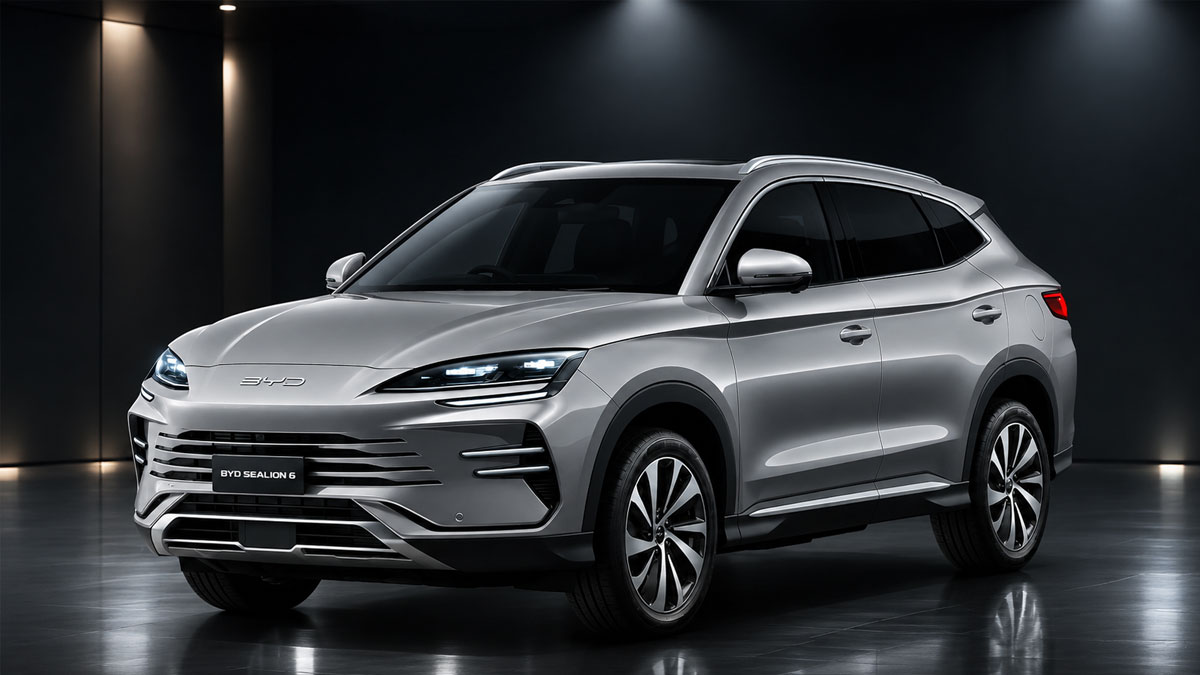
A bipartisan push in the United States Congress to permanently restrict Chinese connected vehicles is gaining momentum, raising questions about which automakers could be affected and how the proposed restrictions would reshape the American automotive market. The campaign has received strong backing from the Teamsters union, even as President Donald Trump has expressed openness to Chinese manufacturers establishing vehicle production facilities in the United States.
During a September 11 appearance on Fox News’ ‘The Ingraham Angle’ and in comments reported by The Hill, Trump indicated that he would welcome Chinese automakers building cars in America. The position differs sharply from that of the Teamsters, which wants Congress to prevent Chinese automotive companies from gaining access to the U.S. market. This week, the union called on lawmakers to approve permanent restrictions before Congress adjourns.
The union’s intervention centres on the proposed Connected Vehicle Security Act of 2026. In a letter addressed to lawmakers, Teamsters President Sean O’Brien warned that allowing Chinese automotive manufacturers to enter the American market could put domestic employment, industrial competitiveness, consumer privacy and national security at risk. The legislation previously advanced through the Senate Commerce Committee in July but has not yet secured approval from the full Congress.
Although the proposed legislation has attracted attention, Chinese vehicle manufacturers already face substantial barriers to selling their products in the United States. A Commerce Department regulation introduced in January 2025 restricts certain connected vehicles associated with manufacturers from China and Russia, alongside specific software and hardware components. The vehicle and software restrictions begin with the 2027 model year, while hardware-related restrictions take effect later. The measures were introduced over concerns that connected-car technology could expose sensitive information or potentially allow outside parties to interfere with vehicle systems. Chinese electric vehicles also face U.S. tariffs exceeding 100%.
The new legislation would establish these restrictions through federal law rather than relying primarily on executive regulations. Supporters believe this would make the restrictions more difficult for a future administration to remove. Republican Senator Bernie Moreno of Ohio and Democratic Senator Elissa Slotkin of Michigan are among the leading supporters of the proposal. Both argue that limiting Chinese automotive technology is important for protecting national security and strengthening American manufacturing.
However, determining which companies should fall under the proposed restrictions has become one of the most complicated aspects of the negotiations. The ownership structures of several established international automakers could potentially bring them within the scope of a broadly written ban.
Mercedes-Benz and Volvo are among the manufacturers raising questions. Chinese investors collectively own approximately 20% of Mercedes-Benz, while Volvo Cars is majority-owned by China’s Geely Holding. Although both companies are established global automotive brands rather than businesses commonly identified by consumers as Chinese automakers, ownership-based restrictions could create complications for their operations.
Moreno said on Monday that proposed compromise language would protect Mercedes-Benz and Volvo from being affected. However, the final legislative wording has not yet been published or approved, meaning the precise treatment of these manufacturers remains subject to negotiations.
Another disputed issue concerns vehicles entering the United States from neighbouring countries. Moreno indicated that the proposed legislation would prevent residents of Canada and Mexico from driving Chinese-built vehicles across the U.S. border. Such a restriction could affect cross-border travel beyond the direct sale of vehicles in American dealerships. Questions remain about how authorities would enforce the provision and whether visitors who already own Chinese-made vehicles would face restrictions when entering the country.
The political debate has also exposed differences between the administration’s approach and the position taken by supporters of the proposed legislation. Trump has indicated that Chinese companies could be welcome to manufacture vehicles in the United States, while the Teamsters and the bill’s sponsors favour stronger restrictions. As reported by Reuters, the differing positions reflect a broader disagreement over whether domestic manufacturing would address concerns about Chinese automotive technology.
For American workers, production facilities established by Chinese companies could potentially create manufacturing employment. However, supporters of the proposed restrictions argue that assembling vehicles inside the United States would not necessarily resolve concerns involving software, connected systems and access to sensitive consumer information.
Moreno has indicated that lawmakers are approaching an agreement on the legislation and expressed hope that the House of Representatives could vote on it soon. However, no final vote has been confirmed, and the proposed restrictions have not yet become law.
For U.S. consumers, the immediate impact could be relatively small because existing regulations and tariffs already make it difficult for Chinese automakers to enter the market. The larger question concerns the future direction of American automotive policy and whether Washington intends to maintain long-term barriers against manufacturers from one of the world’s fastest-growing automotive industries.
Australia provides an example of what greater access for Chinese automakers could mean for an established automotive market. The country’s domestic vehicle manufacturing industry gradually disappeared between 2008 and 2017, before Chinese brands became major competitors in the market.
By October 2026, BYD had become Australia’s second-largest brand for new-vehicle sales, behind Toyota. Other Chinese manufacturers, including MG, GWM, Geely and Chery, also secured positions among the country’s top 10 automotive brands. According to VFACTS figures, vehicles manufactured in China, including models sold under non-Chinese brand names, represented 36.3% of recorded sales.
The expansion of Chinese manufacturers has coincided with declining market shares for several established automotive companies. Toyota’s share of the Australian market reportedly fell from 20% to 16.7%, while Nissan experienced a 21% decline in sales. Honda, Mazda and Subaru also lost market share during the period.
Australia’s experience illustrates how competition can change when consumers gain access to a wider selection of electric vehicles and fuel-efficient models offering extensive features at competitive prices. The growing presence of Chinese manufacturers has created additional pressure on established automotive brands operating in the country.
The developments offer American policymakers a useful comparison as they consider the proposed legislation. The central debate extends beyond whether Chinese vehicles should be permitted in the United States. It also involves balancing national security and domestic manufacturing interests against competition, consumer choice and the future development of the automotive industry.




Related Articles
Subaru Reveals WRX STI Sport R With Manual Gearbox for Japan
Subaru has introduced the new WRX STI Sport R in Japan, bringing...
Nissan Micra EV Faces Tough Competition in Europe’s Growing Market
Nissan’s new electric Micra is entering Europe’s increasingly competitive affordable EV market,...
Genesis Unveils GV80 and G80 Hybrids Ahead of LA Auto Show
Genesis has introduced two new hybrid models, the 2028 GV80 Hybrid SUV...

Kia EV2 Review: Affordable Electric SUV Targets 275-Mile Range
Kia is targeting the growing affordable electric SUV market with the new...
Leave a comment