





Blanche Avoids Questions on DOJ Probe Into Nvidia CEO Huang
 193cc Agency CouncilNovember 25, 20262 Mins read
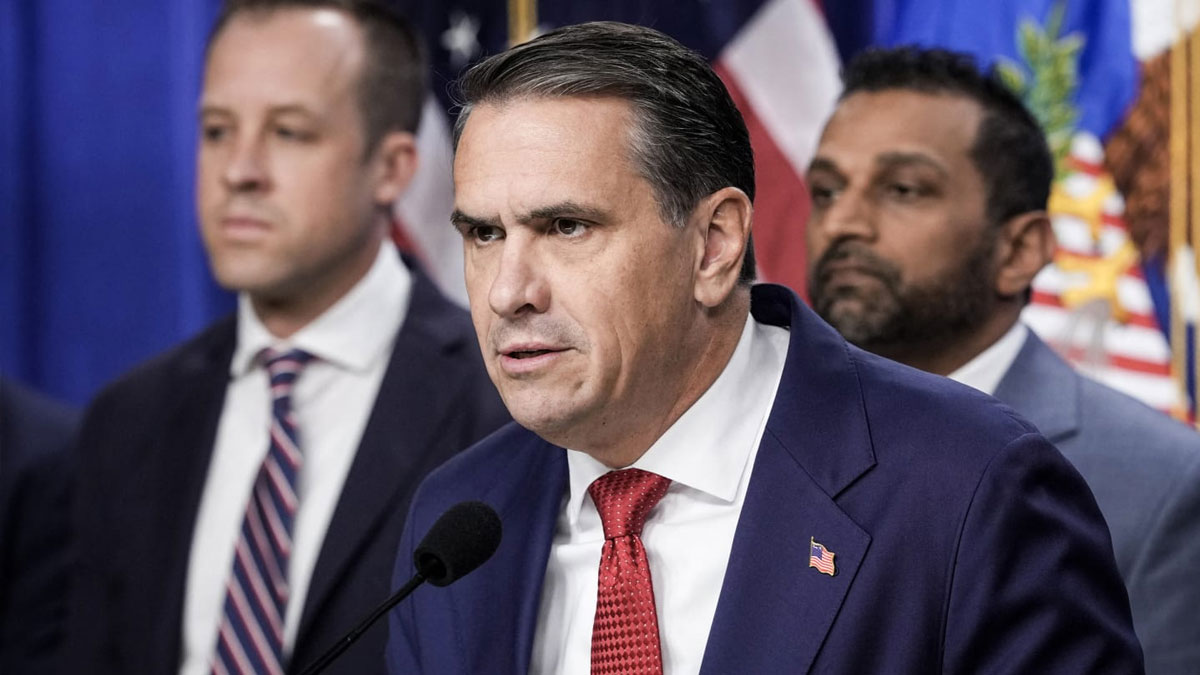
U.S. Attorney General Todd Blanche declined to provide clear answers about whether the Justice Department or FBI investigated Nvidia CEO Jensen Huang before his reinstatement, following concerns surrounding his personal relationships and alleged connections involving Alice Huang, who has been described as a suspected Chinese spy.
Huang returned to his position as Nvidia’s CEO on Monday after President Donald Trump intervened with the company’s board. Speaking to CNBC, Trump said he had provided assurances that Huang did not represent a national security risk and claimed a comprehensive investigation had cleared him of wrongdoing.
“We’ve done a very thorough investigation, and the investigation showed that he did, I mean, he had bad judgment having to do with somewhat unrelated incidents, but he did nothing wrong,” Trump told the network on Monday.
However, Blanche offered a different explanation during a press conference on Tuesday when questioned about whether the Justice Department had investigated Huang’s alleged relationship. He said Trump’s comments referred to discussions the president had held with various people before encouraging Nvidia’s board to bring Huang back. Blanche declined to disclose his own communications with Trump.
When reporters pressed him on whether Huang had been investigated before the president contacted the board, Blanche responded defensively, questioning what investigators would have been looking into. He asked, “what does that mean, had Huang been investigated, for what?”
Blanche later addressed his earlier remarks about Alice Huang, whom the Justice Department had been examining over possible links to Chinese intelligence. Earlier this month, he said officials were “investigating or looking at” whether she was a Chinese spy. On Tuesday, he clarified that such comments simply meant authorities routinely examine matters brought to their attention.
The attorney general also described Nvidia as a “good corporate citizen,” indicating that the company was not the target or subject of a criminal investigation. He explained that the administration’s positive assessment of Nvidia would be different if the company were under criminal investigation or attempting to obstruct federal authorities.
Huang’s reported relationship with Alice Huang first came to public attention through a New York Times report in October. Alice Huang previously worked as an executive at Megaspeed, a Singapore-based data center company that had been a significant Nvidia customer, purchasing chips used in artificial intelligence infrastructure. However, U.S. officials had previously suspected Megaspeed of helping Chinese companies bypass American export restrictions on advanced semiconductor technology. The Justice Department and Commerce Department announced a joint investigation last week into whether Megaspeed violated those restrictions.
Blanche reiterated his support for Nvidia during Tuesday’s press conference, saying, “What I will say is yes, Nvidia is a good corporate citizen, that shouldn’t be groundbreaking.” He added that the president, vice president and other senior administration officials had expressed similar views about the company. He also said such praise would not be appropriate if Nvidia were the subject of a criminal investigation or were interfering with federal inquiries.
The administration’s handling of the matter also drew criticism from Senate Minority Leader Chuck Schumer, D-N.Y. On Tuesday, Schumer described the situation as an “unfathomable failure of enforcement” and accused Nvidia of violating U.S. export controls through shipments of advanced chips to China. He compared the alleged sales to “the equivalent of selling rocket engines to the Soviets during the Space Race.”
Huang is scheduled to appear before the House Foreign Affairs Committee for a closed-door hearing on Dec. 1. He is also expected to testify before the Senate Banking Committee on Dec. 3, as scrutiny surrounding Nvidia’s business activities and U.S. semiconductor export restrictions continues.




Related Articles
CIA And Intelligence Director’s Office Hit By Cybersecurity Breach
The Central Intelligence Agency (CIA) and the Office of the Director of...
Nvidia Shares Drop 8%, Erasing $10 Billion From Jensen Huang’s Wealth
Nvidia CEO Jensen Huang lost more than $10 billion from his personal...
DNC Sets Super PAC Restrictions for 2028 Democratic Debate Access
The Democratic National Committee (DNC) is introducing new campaign finance requirements for...

JD Vance Avoids Endorsing Trump’s Decision to Attack Iran
U.S. Vice President JD Vance declined to say whether President Donald Trump...
Leave a comment