





Storm Reveals Kennedy Center Facade Without Trump’s Name
 193cc Agency CouncilNovember 28, 20262 Mins read
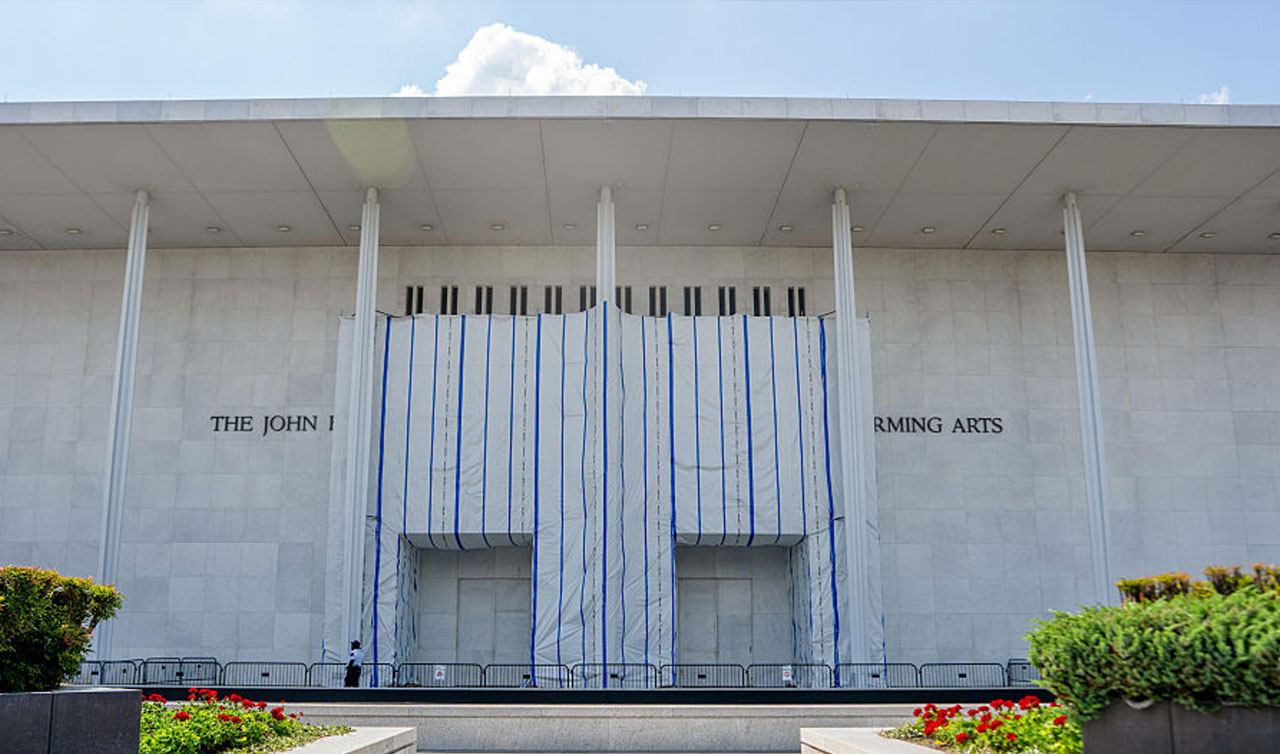
A powerful nor’easter that swept across much of the eastern United States on Thanksgiving temporarily exposed part of the John F. Kennedy Center for the Performing Arts facade that had been covered by a large tarp. The damage revealed the area where President Donald Trump’s name had previously appeared, marking the first public view of the section since a judge ordered its removal in June.
Footage recorded after the storm by NBC 4 showed a corner of the tarp coming loose from the scaffolding surrounding the building. The opening partially revealed the facade, where only the Kennedy Center’s name was visible. Workers repaired the covering by early afternoon, once again concealing the lettering from public view.
Although the Kennedy Center has informed the court that Trump’s name was removed, the building’s facade has remained hidden behind the tarp. Rep. Joyce Beatty, a Democrat from Ohio who filed a lawsuit against the Trump administration over the covering, accused officials of keeping it in place for months to “defy a return to the status quo.” In an August court filing, she described the administration’s actions as a “childish refusal to accept this court’s ruling.”
The Justice Department defended the covering in August, arguing that the tarp was “necessary” because of “ongoing construction.”
The dispute follows a May ruling by U.S. District Court Judge Christopher Cooper, who determined that the Kennedy Center board appointed by Trump could not rename the institution without approval from Congress. Cooper ordered the administration to remove Trump’s name from the building’s exterior.
After taking office, Trump assumed control of the center’s board, replaced its leadership and made himself chairman. His administration also pursued changes to the institution’s cultural programming, shifting it toward a more conservative direction. The changes prompted the cancellation of scheduled performances, including a planned run of the musical “Hamilton.”
Trump subsequently announced that the Kennedy Center would close for two years to accommodate renovations and repairs. Beatty challenged that plan in her lawsuit. The board also pursued other ways to recognize Trump, including approving an inscription crediting his restoration efforts and proposing to rename the grounds “President Donald J. Trump Plaza.” Judge Cooper blocked those efforts as well.
The legal dispute remains ongoing. During a Nov. 19 hearing, the Justice Department asked Cooper to lift his order preventing the administration from closing the center for two years, according to The Washington Post. Beatty’s attorney, Nathaniel Zelinsky, argued that removing the restriction would “embolden future breaches and misbehavior” by the administration. He also asked the judge to appoint an independent monitor to oversee the institution if the closure order is lifted.
Cooper did not issue an immediate decision following the hearing, leaving the center’s proposed closure and the broader dispute over its management unresolved.





Related Articles
Iran Calls Deadly Kuwait Drone Strike On Italians A Possible Setup
Iranian Foreign Minister Seyed Abbas Araghchi has questioned Tehran’s alleged involvement in...

Trump Urges Putin To End Military Aggression Across Europe
U.S. President Donald Trump said Thursday that he had urged Russian President...
Trump Proposes New Tariffs on China, Japan and EU Trading Partners
President Donald Trump has announced plans to introduce additional tariffs on imports...

CIA And Intelligence Director’s Office Hit By Cybersecurity Breach
The Central Intelligence Agency (CIA) and the Office of the Director of...
Leave a comment