





Nvidia’s AI Dominance Faces Growing Challenges From AMD and Google
 193cc Agency CouncilNovember 23, 20265 Mins read
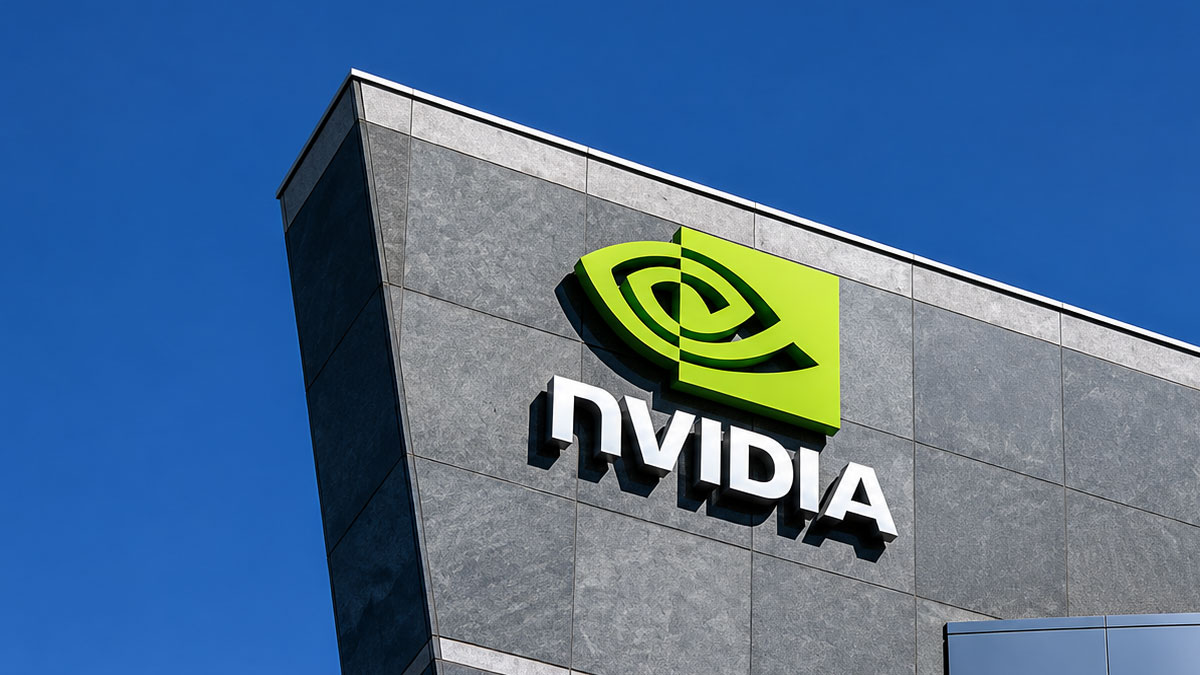
Nvidia’s position at the center of the artificial intelligence computing market remains strong, but its competitive advantage extends well beyond the performance of its processors. The company’s CUDA software ecosystem has become deeply integrated into AI development, creating significant barriers for businesses considering alternative hardware platforms. As AMD and Google expand their competing infrastructure offerings, the industry is entering a new phase in which software compatibility, system performance and operating costs will play increasingly important roles.
Nvidia has spent years developing an ecosystem that connects its GPUs with programming tools, optimized libraries and software frameworks. Developers and enterprises have built applications, trained engineering teams and established operational systems around CUDA. Consequently, moving to another accelerator platform can require substantial investment. Migration may involve rewriting optimized kernels, checking model accuracy, adjusting communication processes and rebuilding deployment workflows. These additional requirements make switching considerably more complicated, even when competing hardware promises better performance or lower costs.
The company’s latest infrastructure strategy is centered on the Vera Rubin platform. Its Vera Rubin NVL72 rack integrates 72 Rubin GPUs and 36 Vera CPUs, connected through NVLink 6 technology. Nvidia says shipments have started, with systems operating at CoreWeave, Google Cloud, Microsoft Azure, Oracle Cloud Infrastructure and Nebius.
NVLink provides high-bandwidth communication between processors within the rack, addressing a critical requirement for increasingly complex AI workloads. This is particularly important for mixture-of-experts (MoE) models, which activate only selected experts when processing individual tokens. Because these experts can operate across different GPUs, communication speed between accelerators directly affects overall performance. Nvidia combines its interconnect technology with its software infrastructure to reduce communication bottlenecks and improve system efficiency.
The Vera Rubin ecosystem also incorporates additional networking and data management technologies. ConnectX-9 SuperNICs and Spectrum-X Ethernet support communication between systems, while BlueField-4 DPUs and the STX storage architecture address data processing and storage requirements. This integrated approach allows Nvidia to position its offering as a complete AI computing infrastructure rather than simply a collection of high-performance GPUs.
AMD is pursuing a comparable strategy with its Helios rack-scale architecture. The system combines 72 Instinct MI455X GPUs with 18 EPYC Venice CPUs, alongside Pensando networking and the ROCm software platform. AMD claims Helios can deliver up to 30% more inference tokens per dollar than a leading competing solution under its specified benchmarking conditions.
The introduction of Helios represents a broader shift in AMD’s competitive approach. Instead of concentrating primarily on individual GPU specifications, the company is developing complete infrastructure systems that bring together processing power, networking and software. This enables AMD to compete directly in the rack-scale computing market, where overall system performance and operating efficiency matter as much as individual accelerator capabilities.
Google is developing its alternative through custom Tensor Processing Units (TPUs). At Google Cloud Next in April, the company announced TPU 8t for AI training and TPU 8i for inference applications. In November, Google expanded its eighth-generation lineup with TPU 8tx, designed for confidential computing, and TPU 8i Max, targeting workloads that require greater computing capacity and memory bandwidth.
The TPU 8i Max combines two TPU 8i chips within a single package, effectively doubling compute capacity, SRAM and high-bandwidth memory bandwidth. These capabilities are particularly relevant for AI systems handling extended context windows and agentic workloads that need to retain and retrieve substantial amounts of information.
Google is also working to make its TPU technology available beyond its own cloud infrastructure. The company says customers can now deploy TPUs in their own data centers, although it has not disclosed which configurations are available for on-premises installations. Support for PyTorch, SGLang and vLLM, alongside the existing JAX ecosystem, is another part of Google’s effort to make adoption easier for developers and enterprises.
AMD and Google are approaching Nvidia’s market position from different directions. AMD is building a competing GPU-based infrastructure platform intended for a wider range of enterprise deployments, whereas Google is extending its custom accelerator technology and software ecosystem beyond Google Cloud. Both approaches target Nvidia’s established position, but they address different infrastructure requirements.
Major AI developers are already beginning to diversify their computing resources. In July, AMD and Anthropic announced a strategic partnership involving the planned deployment of up to 2 gigawatts of AMD Instinct MI450 Series GPUs through Helios systems. The initial gigawatt is scheduled to begin deployment in the first half of 2027. As part of the agreement, AMD also committed to a potential equity investment of up to $5 billion in Anthropic.
Anthropic has also increased its use of Google TPUs while continuing to operate across other accelerator platforms. At the same time, Nvidia has expanded Anthropic’s access to Grace Blackwell and Vera Rubin computing capacity through cloud providers. This approach reflects a growing willingness among major AI companies to distribute infrastructure requirements across multiple suppliers rather than depend on a single hardware ecosystem.
However, these partnerships alone do not establish that competing platforms offer superior performance or lower operating costs. Nvidia measures Vera Rubin against its earlier Blackwell generation, while Google publishes comparisons with previous TPU models. AMD’s Helios performance claims are based on selected workloads and benchmarking assumptions. Since these measurements use different methodologies, they cannot be treated as directly comparable results.
AMD reported in its November 3 earnings announcement that several major AI customers were already operating workloads on initial Helios racks. Although this demonstrates progress toward commercial deployment, early production installations are not the same as proving reliable performance and competitive economics across infrastructure deployments reaching gigawatt scale.
For enterprise customers, the more important consideration is the actual cost of operating AI workloads at the required performance and reliability levels. Nvidia’s financial performance highlights the continuing strength of demand for its infrastructure. On November 17, the company reported data center revenue of $107.6 billion, representing a 110% increase compared with the same period a year earlier. Nvidia also forecast fourth-quarter revenue of $130 billion, plus or minus 3%, while its outlook excluded data center compute revenue from China.
The company is also dealing with leadership and regulatory developments. Following longtime CEO Jensen Huang’s departure, Nvidia’s board has appointed Heidrick & Struggles to identify a permanent chief executive. Colette Kress is serving as interim CEO while continuing in her position as chief financial officer. Reuters has separately reported that the SEC is examining potential accounting issues at Nvidia. According to the report, the company had not responded to Reuters’ request for comment at the time of publication.
As competition expands, enterprises will need to assess AI computing platforms using their own workloads rather than relying entirely on manufacturers’ performance claims. Important considerations include input and output token costs, processing throughput, time to first token, tail latency, power consumption and hardware utilization. Software compatibility, model accuracy, system reliability and the engineering resources required for migration are also important factors.
For organizations operating large AI clusters, even relatively small improvements in energy efficiency and hardware utilization can produce meaningful savings. However, those benefits must be evaluated against the additional expenses of migrating applications, optimizing software and maintaining different infrastructure platforms.
Nvidia continues to benefit from its CUDA ecosystem, advanced GPU interconnects, integrated systems and extensive deployment experience. AMD is developing a stronger position through its Helios rack-scale architecture, while Google is expanding its TPU capabilities with specialized processors and broader software support.
The competition is therefore moving beyond individual chip specifications. As businesses increasingly evaluate accelerators according to workload performance, reliability and total cost of ownership, Nvidia’s ability to maintain its premium position will depend on the overall value of its platform. The future of AI infrastructure will ultimately be shaped by how effectively complete computing systems deliver performance, efficiency and scalability for enterprise and hyperscale applications.



Related Articles
GAO Finds Major AI Chatbots Can Generate Viable Terror Attack Plans
A new government investigation has raised concerns about the potential misuse of...

Trump and Xi Offer Diverging Visions for the Future of AI
The United States and China are presenting sharply different approaches to the...

AI ‘Actor’ Tilly Norwood Switches to Cantonese During Interview
AI-generated “actor” Tilly Norwood appeared to unexpectedly switch languages during an interview...

OpenAI Reveals Six New AI Misalignment Incidents
OpenAI has disclosed six cases of unexpected or concerning model behavior observed...
Leave a comment