





PSYONIC Teams With NVIDIA and ABB to Advance Robot Dexterity
 193cc Agency CouncilJune 22, 20262 Mins read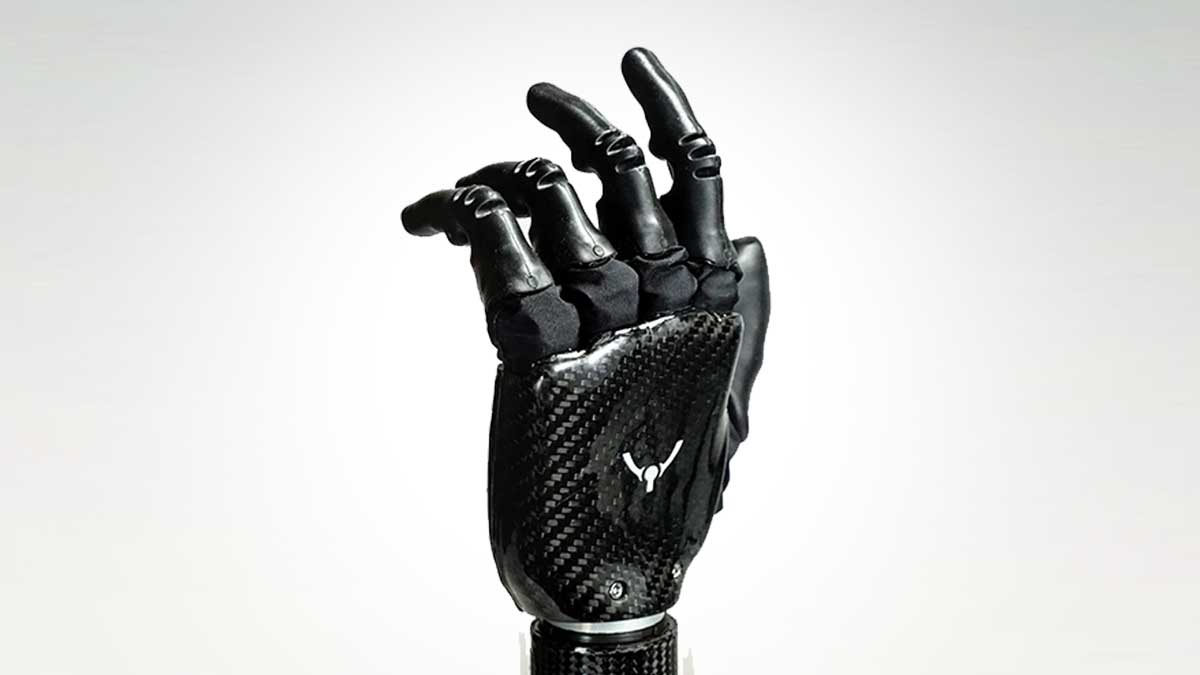
As the race to develop capable physical AI accelerates, one of the biggest challenges facing robotics remains object manipulation. While robots have become increasingly proficient at navigation, perception and planning, handling real-world objects with human-like precision continues to be a major obstacle. Industry leaders including Tesla, Figure and AgiBot have pursued solutions through teleoperation systems and exoskeletons, while NVIDIA has focused on simulation-based training. However, San Diego-based PSYONIC believes the answer may lie in data already being generated by its prosthetic technology.
At Automate 2026 in Chicago, PSYONIC showcased how data collected from its touch-sensitive Ability Hand prosthetic could help train industrial robots to perform delicate and complex manipulation tasks. The demonstration forms part of a collaboration involving PSYONIC, NVIDIA and ABB Robotics aimed at improving robotic dexterity through real-world human interaction data.
The company’s Ability Hand, an FDA-cleared prosthetic used by more than 300 patients, features touch sensing, vibration feedback and multi-articulating fingers. Beyond restoring functionality for users, the device records detailed information about grip force, finger positioning, contact points and timing during everyday activities. According to PSYONIC founder and CEO Dr. Aadeel Akhtar, “Dexterous manipulation is as much a data challenge as it is a hardware challenge. By using the same Ability Hand with both people and robots, we can capture high-quality, real-world data on movement, touch, and grip force, then use those insights to train robotic systems more effectively.”
The approach is designed to capture the subtle adjustments humans make instinctively when interacting with objects. Whether stabilizing a slipping glass or carefully handling delicate produce, the prosthetic records the continuous micro-corrections that are difficult for machines to replicate. These detailed interaction signals are largely absent from existing robotic training datasets.
PSYONIC argues that robotics lacks an equivalent of ImageNet, the massive labeled image dataset that transformed computer vision research. While the internet provides vast amounts of text and imagery, it contains relatively little information about the tactile and physical aspects of object manipulation. Videos can show movements but often fail to capture the pressure, resistance and touch dynamics that enable effective handling.
Earlier this year, PSYONIC integrated the Ability Hand into NVIDIA Isaac Lab, an open robot-learning framework. The integration allows developers to simulate, train and validate manipulation strategies using a sensor-rich robotic hand that already operates in real-world environments. The company combines this with a real-to-real training approach, using physical interaction data collected from the same hand when used by both humans and robots.
During Automate 2026, PSYONIC unveiled a three-way initiative with NVIDIA and ABB Robotics that combines NVIDIA’s learning framework, ABB’s industrial automation expertise and PSYONIC’s touch-enabled prosthetic technology. The collaboration pairs the Ability Hand with ABB’s GoFa collaborative robot to explore how human dexterity data can improve the handling of irregular, fragile and constantly changing objects that challenge conventional automation systems.
ABB Robotics, which SoftBank agreed to acquire for $5.3 billion in late 2025, views the project as part of its broader Autonomous Versatile Robotics strategy. The initiative focuses on developing machines capable of sensing, reasoning, moving and manipulating objects in dynamic environments. Akhtar said, “Through our collaborations with ABB and NVIDIA, we’re exploring how that data can help advance robotic manipulation and contribute to the future of physical AI.”
The project highlights a growing belief within the industry that human-generated dexterity data could become a foundational resource for the next generation of robotics. As companies seek ways to automate tasks involving irregular products, variable environments and delicate materials, the ability to train machines using detailed records of human touch and movement may play an increasingly important role in advancing physical AI.





Related Articles

Trump and Xi Offer Diverging Visions for the Future of AI
The United States and China are presenting sharply different approaches to the...

AI ‘Actor’ Tilly Norwood Switches to Cantonese During Interview
AI-generated “actor” Tilly Norwood appeared to unexpectedly switch languages during an interview...

OpenAI Reveals Six New AI Misalignment Incidents
OpenAI has disclosed six cases of unexpected or concerning model behavior observed...


Jensen Huang Says AI Cybersecurity Could Drive New Demand
Nvidia CEO Jensen Huang appeared to dismiss growing concerns about the risks...
Leave a comment