
Getty-OpenAI Deal Sparks New Questions Over AI Training Rights
 193cc Agency CouncilJune 23, 20262 Mins read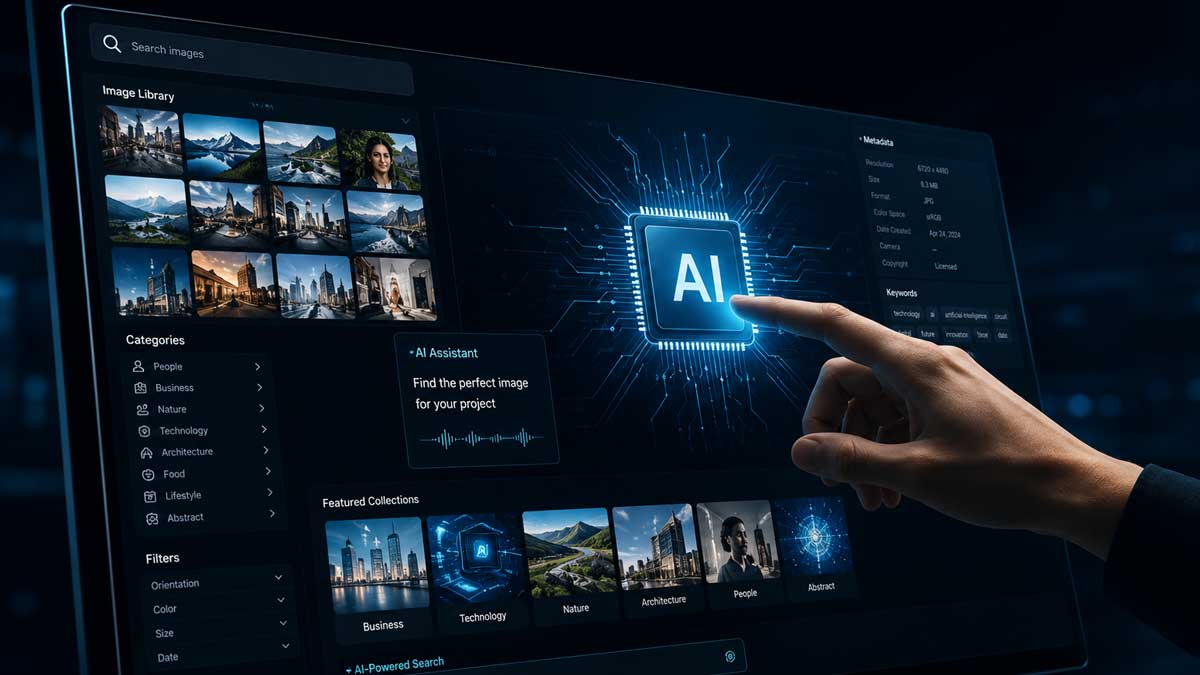
Getty Images has entered a multi-year agreement with OpenAI that will integrate Getty’s licensed photo library into ChatGPT’s search and discovery features, a move that was enthusiastically received by investors but has also raised fresh questions about how the content may be used in the future.
Announced on June 21, the arrangement will allow ChatGPT to display licensed Getty photographs when users request image-related information, offering an alternative to AI-generated visuals. The market reacted strongly to the news, with Getty shares surging by as much as 200% in premarket trading before retreating later in the session. The rally followed a difficult year for the company, during which its stock had lost more than half its value.
Despite the positive market response, details surrounding the agreement remain limited. Getty’s announcement did not disclose the length of the contract beyond describing it as multi-year, nor did it reveal financial terms, revenue-sharing arrangements, or the amount of money involved. Most notably, the company did not clarify whether its images can be used to train future OpenAI artificial intelligence models.
That unanswered question is particularly significant given Getty’s recent legal battles over AI training practices. The company previously pursued lawsuits against Stability AI in both the United Kingdom and the United States, alleging that approximately 12 million Getty images had been scraped without authorization to train an image-generation system. However, in November 2025, the U.K. High Court largely ruled in Stability AI’s favor, rejecting Getty’s primary copyright claims while finding only limited liability related to trademark issues.
The absence of any public statement on training rights contrasts with Getty’s earlier partnership with Perplexity, where the agreement explicitly excluded the use of Getty content for AI model training. The OpenAI announcement contains no such restriction, leaving uncertainty about the same rights Getty spent years defending in court.
The stock surge also drew attention, though analysts noted that Getty’s low share price amplified the percentage gains. With the stock trading below $1 before the announcement and roughly 17% of its float sold short, conditions were favorable for a sharp short squeeze. Shares opened near $1.40, climbed as high as $2.66 during trading, and later closed around $1.19. The company continues to carry substantial debt and reports a negative net margin despite generating approximately $981 million in trailing revenue.
For Getty, the partnership represents a strategic effort to position itself within the rapidly evolving AI ecosystem rather than compete directly against it. By supplying licensed images to one of the world’s largest AI platforms, Getty is seeking to establish itself as a trusted source of authenticated visual content at a time when synthetic imagery is becoming increasingly common.
The agreement also aligns with broader moves by the company to strengthen its presence across AI, sports, and entertainment. Getty recently renewed a multi-year partnership with U.S. Soccer ahead of the 2026 FIFA World Cup and extended its relationship with the Tribeca Festival, reinforcing its role as a major provider of licensed media content.
For Getty’s network of roughly 600,000 contributors, however, questions remain. While the deal clearly grants rights for displaying photographs within ChatGPT, it leaves unanswered whether those same images could eventually become training data for AI systems. The distinction is crucial for creators, who view licensed distribution and AI training as fundamentally different uses of their work. As Getty celebrates its latest AI partnership, the unresolved issue of training rights continues to draw attention from contributors whose content forms the foundation of the company’s business.



Related Articles
Trump and Xi Offer Diverging Visions for the Future of AI
The United States and China are presenting sharply different approaches to the...
AI ‘Actor’ Tilly Norwood Switches to Cantonese During Interview
AI-generated “actor” Tilly Norwood appeared to unexpectedly switch languages during an interview...
OpenAI Reveals Six New AI Misalignment Incidents
OpenAI has disclosed six cases of unexpected or concerning model behavior observed...


Jensen Huang Says AI Cybersecurity Could Drive New Demand
Nvidia CEO Jensen Huang appeared to dismiss growing concerns about the risks...
Leave a comment