




Nissan Micra EV Faces Tough Competition in Europe’s Growing Market
 193cc Agency CouncilNovember 21, 20264 Mins read
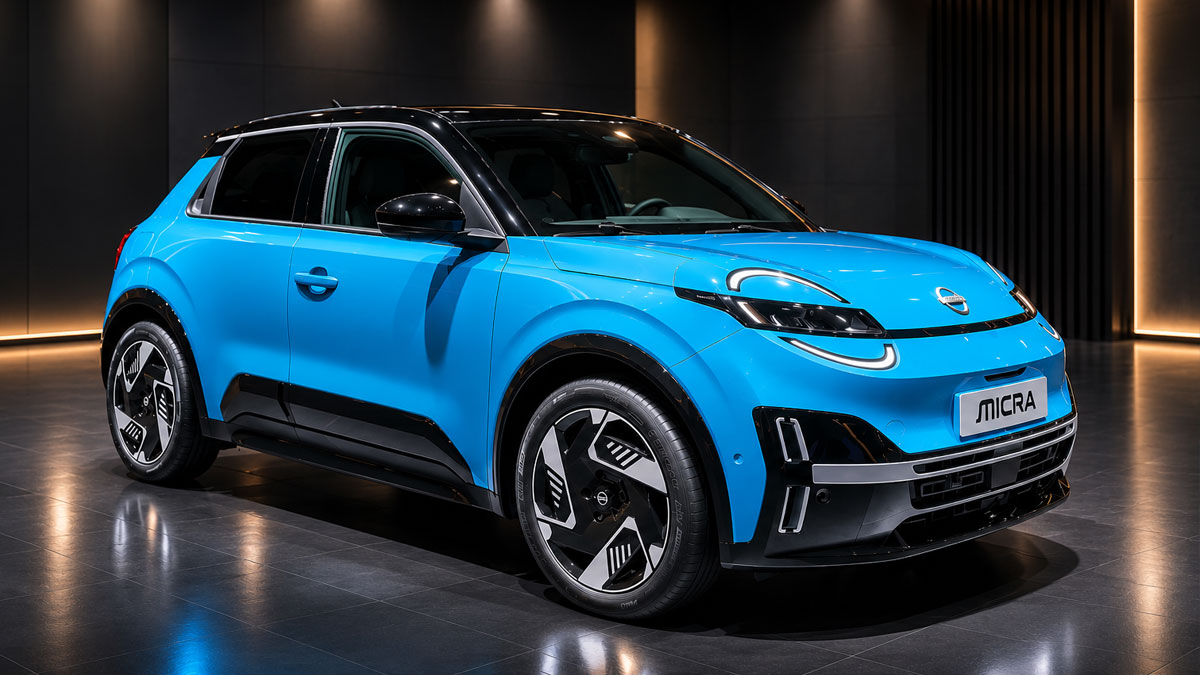
Nissan’s new electric Micra is entering Europe’s increasingly competitive affordable EV market, but delivering an attractive small car may not be enough to secure strong sales. The Japanese automaker faces growing pressure from Chinese manufacturers, pricing challenges and uncertainty over exports from its major U.K. production facility following Brexit.
The electric Micra is an important addition to Nissan’s European lineup, offering a compact design and a range of features aimed at buyers seeking a more affordable electric vehicle. However, the model faces competition from around 20 other vehicles in the same market, creating pressure on manufacturers to offer competitive prices and attract customers.
Nissan is also working to redefine its position after moving away from its former close relationship with Renault. The company’s financial performance has raised concerns among investors. Research firm Bernstein reported that Nissan’s revenue increased 8% in the quarter ending September 30, but the company recorded a loss equivalent to approximately $270 million. Despite the results, Nissan maintained its profit guidance for investors. Bernstein warned that the company’s higher sales ambitions could prove difficult to achieve in the current competitive environment.
The research firm highlighted the challenge posed by Chinese electric vehicle manufacturers in Europe. Nissan has set a fiscal-year sales target of 340,000 vehicles, representing a 7% annual increase, but Bernstein believes achieving that figure will be difficult as new Chinese EV models enter the market. Nissan is expected to announce a new business strategy in February 2027, covering future growth plans, autonomous driving technology and potential partnerships, including cooperation with Honda.
Nissan and Honda briefly considered a merger in late 2024, but discussions ended without an agreement in February 2025.
Nissan’s changing position also reflects the gradual decline of its long-standing partnership with Renault and Mitsubishi. Established in 1999, the alliance reached its strongest sales performance in 2018, when combined deliveries reached 10.8 million vehicles. Its decline followed controversy surrounding former CEO Carlos Ghosn and the subsequent deterioration of relationships between the partners.
Today, Nissan sells close to three million cars, including sedans and SUVs, worldwide each year, while Renault sells approximately 2.3 million. Some joint development projects continue, however. The electric Micra uses the underlying platform and components of Renault’s 5 E-Tech, while the upcoming Nissan Pixo is expected to share its foundations with the next Renault Twingo.
Nissan is continuing to expand its electric vehicle range in Europe. The company has introduced a new generation of its Leaf, a model widely associated with the early development of the modern EV market since 2010. The smaller E-Juke is also part of its plans, while the compact Pixo is scheduled to arrive in 2027.
Industry analyst Felipe Munoz, who operates the research platform Car Industry Analysis, believes Nissan is gradually reducing its reliance on Renault for its electric vehicle expansion. He noted that Renault has developed products increasingly suited to European customer preferences, strengthening its position against its Japanese partner.
Munoz also pointed to the different sales performances of the latest electric models. The new Nissan Leaf recorded slightly more than 3,000 sales through September, while Renault’s Scenic E-Tech reached 34,300 units.
Pricing remains another important factor in Europe’s EV market. Julian Litzinger, an analyst at Germany’s Dataforce, explained that government purchase incentives influence how manufacturers set vehicle prices. Automakers often adjust their pricing around the maximum thresholds required to qualify for subsidies. Litzinger expects the electric Micra to be somewhat cheaper than the Renault 5 on which it is based.
Europe’s electric vehicle market initially developed around expensive, larger models, particularly SUVs capable of accommodating substantial battery systems. Improvements in battery technology have gradually reduced costs, but many electric cars still cost more than €20,000 after tax, equivalent to approximately $22,000.
That price level remains a challenge for buyers seeking genuinely affordable transport. Europe’s EV market share is expected to reach the mid-40% range by 2030, while existing EU targets suggest a figure of around 60%. The difference highlights the need for lower-priced entry-level vehicles. Around a decade ago, European consumers had access to small combustion-powered cars such as the Fiat 500, Ford Ka, Citroen C1, Peugeot 108 and Renault Twingo, with starting prices of approximately €10,000, or $11,000.
Nissan has experience in Japan’s small Kei-car segment and could potentially use that expertise to develop a lower-cost electric vehicle for Europe. The company already sells the electric Sakura in Japan, but adapting a Kei car to European safety requirements would require significant investment.
For now, the upcoming Pixo appears more likely to fill the entry-level role. Litzinger expects the model to be positioned around €20,000 rather than the €10,000 price point associated with earlier small cars. He also noted that the EU’s planned affordable small-car category could create an opportunity for the vehicle. In Germany, government incentives could potentially reduce its effective purchase price to approximately €15,000, or $16,500, if Nissan maintains the expected pricing.
Beyond competition and pricing, Nissan faces uncertainty over its European manufacturing operations. The company has one major vehicle assembly plant in Europe, located in Sunderland in north-east England. A significant portion of its production is exported to European Union markets, making the facility vulnerable to changes in trade arrangements following Brexit.
Under the Brexit arrangements, the EU postponed the introduction of a 10% tariff on electric vehicles manufactured in Britain until January 2027. Discussions between the U.K. and EU were expected to address the issue, but no agreement had emerged by late Friday. Without a deal, British-built EVs exported to the EU could face the additional tariff unless they meet requirements for the proportion of components sourced from the U.K. and EU.
British manufacturers are believed to face difficulties meeting those requirements. The Society of Motor Manufacturers and Traders has warned that the tariffs could cost the industry almost $2 billion.
A possible solution under discussion involves the U.K. adopting stricter EU-style import tariffs on Chinese electric vehicles, potentially exceeding 45%, alongside tougher requirements for plug-in hybrid models. Britain was also expected to consider adjusting its carbon dioxide emissions rules, which currently require 80% of new car sales by 2020 to be electric vehicles, toward the EU’s approximately 60% target.
The Nissan Micra Evolve Chili specification provides an indication of the vehicle’s capabilities. It features a 148-horsepower electric motor operating on a 400-volt system, producing 245 Nm of torque and paired with an automatic transmission. Its lithium-ion battery has a capacity of 52 kWh, delivering a claimed driving range of 257 miles. Nissan lists acceleration from zero to 60 mph at 7.7 seconds and a top speed of 93 mph. The vehicle produces no CO2 emissions while driving.
The listed price is £26,115 after tax, approximately $34,000, including a government grant of £3,750.
While the electric Micra brings Nissan a competitive new option in Europe’s small EV segment, the company faces challenges extending far beyond one model. Strong competition, financial pressure, affordable-car demand and uncertainty over U.K.-EU trade rules will all influence its ability to strengthen its position in the European market.



Related Articles
Genesis Unveils GV80 and G80 Hybrids Ahead of LA Auto Show
Genesis has introduced two new hybrid models, the 2028 GV80 Hybrid SUV...
Kia EV2 Review: Affordable Electric SUV Targets 275-Mile Range
Kia is targeting the growing affordable electric SUV market with the new...

Aventon Current eMTB Brings 750W Power and Full Suspension
Aventon has expanded its electric mountain bike lineup with the new Current,...

2027 Kia Telluride Turbo Hybrid Brings Power and Luxury Value
The 2027 Kia Telluride Turbo Hybrid marks a major step forward for...
Leave a comment