





Disney’s Hexed Explores Generational Trauma Through Its Wicked Villain
 193cc Agency CouncilNovember 26, 20263 Mins read
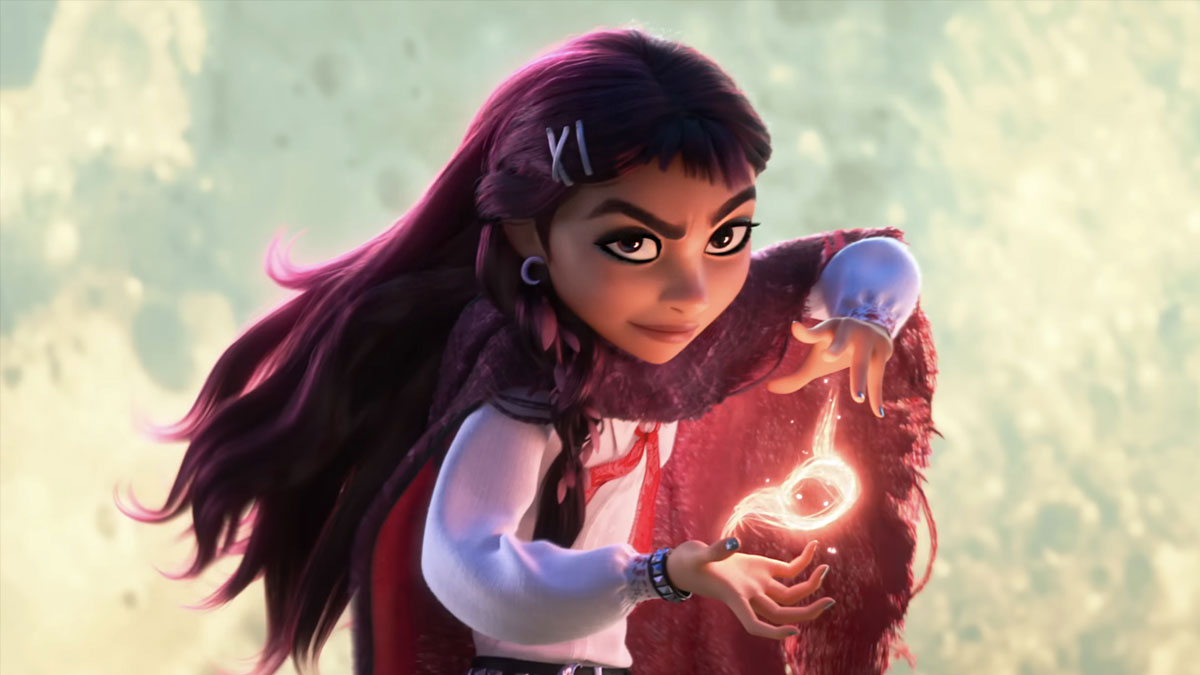
Disney’s upcoming animated film Hexed explores the complicated relationship between mothers and daughters, examining how emotional abuse, unresolved trauma and personal choices can shape family relationships across generations. Directors Fawn Veerasunthorn and Jason Hand, alongside co-director Josie Trinidad, bring these themes into a fantasy story featuring witches, magical worlds and a villain whose cruelty has deep roots in her own upbringing.
The story follows Billie Doe, voiced by Hailee Steinfeld, a rebellious teenager growing up in Plainsville, Ohio. Feeling disconnected from her surroundings, Billie often struggles with her mother’s strict and protective approach. Her mother, Alice Doe, voiced by Rashida Jones, is exhausted from balancing her responsibilities while trying to keep her daughter safe. However, Alice has concealed a major family secret: both of them are witches.
Billie’s life changes when she unexpectedly enters Hexe, a magical world controlled by Queen Celeste, voiced by Jodie Foster. Celeste is Alice’s mother and the very person she has spent years trying to escape. As Billie discovers her magical identity, she also uncovers the painful history that has shaped her family.
Unlike many animated fantasy villains, Celeste is not simply an evil character without explanation. The film reveals that she has spent much of her life treating others with cruelty, including her own daughter and granddaughter. She sees relationships as competitions and views Billie’s emerging magical abilities as another challenge to her authority.
The story also reveals that Celeste placed a curse on Alice, taking away her magical powers. Alice experienced years of criticism and emotional mistreatment while growing up under her mother’s control. However, Celeste’s own behaviour was influenced by the way she had been treated by her parents, creating a pattern of resentment and emotional harm that continued into the next generation.
Screenwriter Dana Ledoux Miller explained that the creative team wanted audiences to understand the experiences behind a character’s behaviour rather than viewing villainy as something that exists without a cause.
“Nobody makes a choice in a vacuum,” Miller said. She explained that people’s decisions are often influenced by emotional wounds and experiences from their past, adding that characters are not necessarily evil simply for the sake of being evil.
Miller and co-screenwriter Jared Bush focused on giving Celeste a believable psychological and emotional background. Their intention was to show how someone who experiences cruelty can eventually repeat that behaviour, particularly when they have never learned a healthier way to treat others. Celeste’s desire to establish her importance also drives her willingness to undermine anyone she considers a threat.
Her treatment of Alice has lasting consequences. Miller explained that Celeste’s repeated suggestions that her daughter was weak shaped Alice’s approach to motherhood. Determined to prevent Billie from experiencing the same treatment, Alice becomes extremely protective. However, her efforts to shield her daughter also create challenges within their relationship.
Despite these difficulties, Alice and Billie share a fundamentally different family dynamic from the one Alice experienced growing up. Their relationship is built on affection and support, even when Alice’s protective instincts become overwhelming. Billie eventually discovers the full extent of her mother’s suffering through a sequence that takes her inside the curse placed on Alice.
During this experience, Billie encounters a vision of her mother while pregnant and attempting to escape Hexe to leave behind the abuse. Rather than turning away from the painful history, Billie supports Alice and helps her confront the past. Their journey becomes an opportunity to break the generational cycle of emotional trauma.
Veerasunthorn said developing this sequence required considerable creative work because the filmmakers wanted to communicate that people are not necessarily destined to repeat the behaviours they experienced growing up. She explained that individuals should feel empowered to make different choices and find the confidence to build healthier relationships with the people they love.
Although Queen Celeste remains the film’s central antagonist, the filmmakers also introduce brief moments that reveal her vulnerability. During the climax, Celeste cries out, “Don’t leave me,” offering a glimpse of the insecurity beneath her controlling personality.
Co-director Josie Trinidad said the moment reveals another dimension of the character. She explained that Celeste’s narcissistic behaviour comes from a deeply damaged emotional background, suggesting there is a history behind her actions even when she refuses to acknowledge it.
The filmmakers also praised Jodie Foster’s voice performance, highlighting the depth and complexity she brought to the character. They noted how her portrayal helped make Celeste both visually captivating and emotionally layered, creating a villain whose personality extends beyond her cruel actions.
Celeste’s presence is also felt throughout the film, even during scenes in which she does not appear. Veerasunthorn explained that the visual storytelling reflects how people can continue to influence others through the consequences of their past actions. The filmmakers deliberately introduced signs of Celeste’s impact before Billie and her grandmother meet directly, allowing audiences to understand the destruction she has caused.
For Miller, developing the characters meant exploring the different sides of their personalities. She noted that even someone responsible for hurting their family can display playful, entertaining and seemingly charming qualities. These contradictions, she explained, create more interesting characters and give storytellers additional opportunities to explore human behaviour.
Through its magical setting and complicated family relationships, Hexed examines how childhood experiences can influence adulthood, while emphasizing the possibility of choosing a different path. The Disney animated film is now in theaters.




Related Articles
Elizabeth Holmes Documentary Crosses $100 Million Before Digital Release
Nathan Fielder and Noah Oppenheim’s documentary about former Theranos CEO Elizabeth Holmes...

Blade Runner 2099 Scores 68% On Rotten Tomatoes, Below Both Films
Amazon Prime Video’s upcoming science-fiction series Blade Runner 2099, featuring Michelle Yeoh...
Hunger Games Prequel Earns $225 Million in Global Box Office Debut
The latest installment in the Hunger Games franchise, “The Hunger Games: Sunrise...

Netflix’s Steps Director Says Trauma, Not Evil, Drives Its Villains
Netflix’s animated film Steps offers a different interpretation of the familiar Cinderella...
Leave a comment