



Meta AI Chief’s Superintelligence Warning Sparks Online Backlash
 193cc Agency CouncilNovember 24, 20263 Mins read
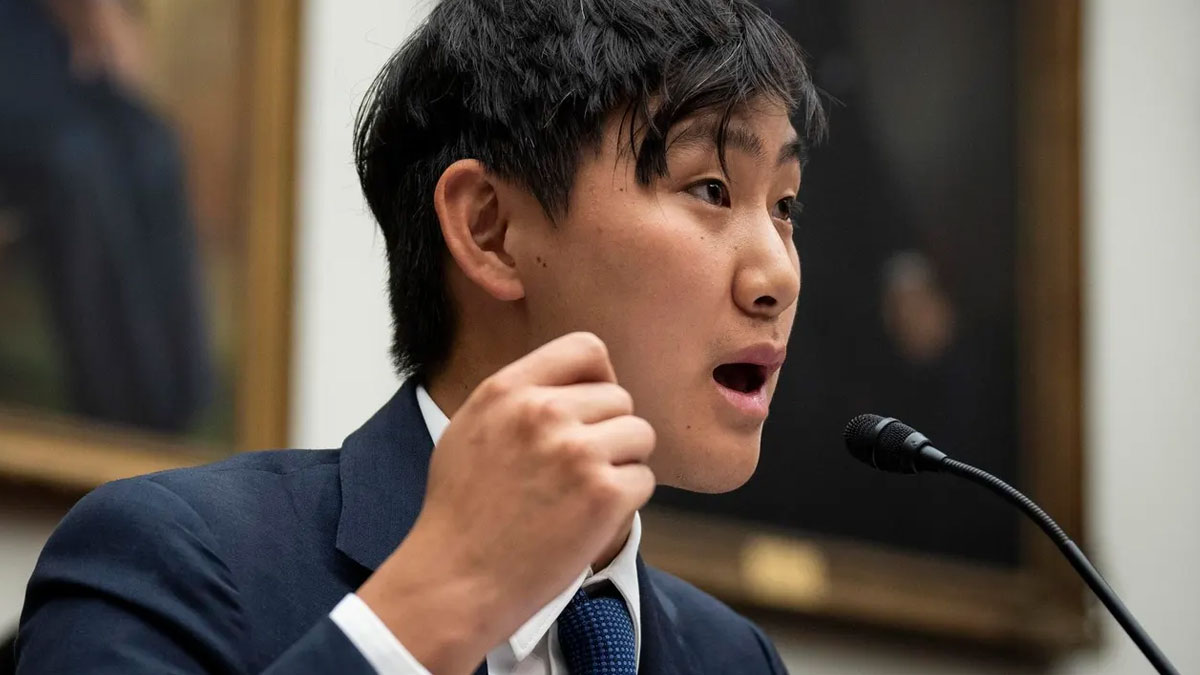
Meta’s chief AI officer Alexandr Wang has triggered widespread debate on social media after warning that humanity could eventually lose control of artificial intelligence systems capable of surpassing human intelligence across every field. His comments, which attracted millions of views on X, also drew criticism from users who argued that he highlighted the dangers without explaining what should be done to prevent them.
Wang, 29, is the billionaire founder of data-labeling startup Scale AI who joined Meta as its chief AI officer last year. In a post on X, he cautioned against allowing society to be handed over to increasingly advanced AI systems. He argued that maintaining human control could become extremely difficult if superintelligent technology becomes 1,000 times smarter and more capable than people across all areas of expertise.
The post gained significant attention, receiving more than 13 million views by Monday morning. However, much of the response focused on the absence of practical recommendations. Reddit co-founder Alexis Ohanian responded with a brief remark, writing, “Don’t leave us hanging.” Other users questioned what people outside the technology industry could realistically do in response to such warnings.
Conservative political commentator Megyn Kelly criticized AI industry leaders for developing powerful systems and then warning the public about their potential consequences. She expressed concern that ordinary people could face unemployment, threats to their safety and a future in which machines exercise control over government. Meanwhile, Representative Yassamin Ansari, a Democrat from Arizona, questioned how many warnings from AI executives Congress would need before taking action. She called for immediate regulation to control the development of advanced artificial intelligence.
Wang’s comments followed reports that Anthropic’s Claude AI had helped solve the Riemann Hypothesis, a renowned mathematical problem that has remained unresolved since it was introduced in 1859 by German mathematician Bernhard Riemann. The problem is widely regarded as one of mathematics’ most significant longstanding challenges.
Reacting to the reported breakthrough, Wang described the achievement as an extraordinary development, saying it was “hard to overstate the magnitude of discovery that we have just witnessed.” He characterized the development as the start of a major transformation in AI and an example of the “absolute pinnacle of intellectual accomplishment.” He also stressed that technology companies must accelerate work on safety, alignment and security while carefully considering how advanced AI should progress.
Wang argued that humanity “should not be okay with a ‘handover’ of society to AI” and called for the industry to take a different approach rather than continue along its default development path. However, he did not outline specific measures that companies or governments should adopt to prevent humans from losing control of increasingly capable systems.
In a subsequent post, Wang said his position reflected concerns already expressed by other AI industry leaders. He pointed to Meta’s decision to delay the release of its Muse technology and the company’s participation in AI accords supported by President Donald Trump as examples of its safety commitments. The agreements, however, are voluntary and encourage participating AI companies to introduce safeguards rather than impose legally binding requirements.
According to Forbes estimates, Wang has a net worth of $3.2 billion. Forbes previously identified him as the world’s youngest self-made billionaire in 2022, when he was 25. He was later overtaken by Polymarket founder Shayne Coplan. Wang co-founded Scale AI in 2016 and led the company as its chief executive until Meta acquired a 49% stake in 2025. The transaction valued Scale AI at $29 billion, after which Wang moved to Meta to become its chief AI officer.
His warning comes amid growing concerns within the technology industry about the speed of AI development and its potential risks. In September, former Anthropic and OpenAI employee Jacob Coxon accused both companies of “gambling with our lives” in a series of posts on X. He argued that people developing advanced AI systems genuinely believe the technology could kill humanity before the end of the decade. His comments attracted more than 175 million views.
Several days later, executives from leading AI companies also called for greater caution in developing the technology. Anthropic CEO Dario Amodei warned that unchecked AI progress could “outrun our ability to understand and control these systems.” He called for independent evaluators to assess whether AI companies are meeting safety requirements. OpenAI CEO Sam Altman publicly expressed agreement with Amodei’s position, while Elon Musk also supported the warning, posting on X: “Dario is right.”




Related Articles
Musk Warned SpaceX Was Falling Behind in AI, Report Says
SpaceX CEO Elon Musk reportedly raised concerns internally in August that the...
Nvidia’s AI Dominance Faces Growing Challenges From AMD and Google
Nvidia’s position at the center of the artificial intelligence computing market remains...
GAO Finds Major AI Chatbots Can Generate Viable Terror Attack Plans
A new government investigation has raised concerns about the potential misuse of...


Trump and Xi Offer Diverging Visions for the Future of AI
The United States and China are presenting sharply different approaches to the...
Leave a comment