





Feather Robotics Launches $29,990 Mobile Humanoid Robot
 193cc Agency CouncilSeptember 26, 20263 Mins read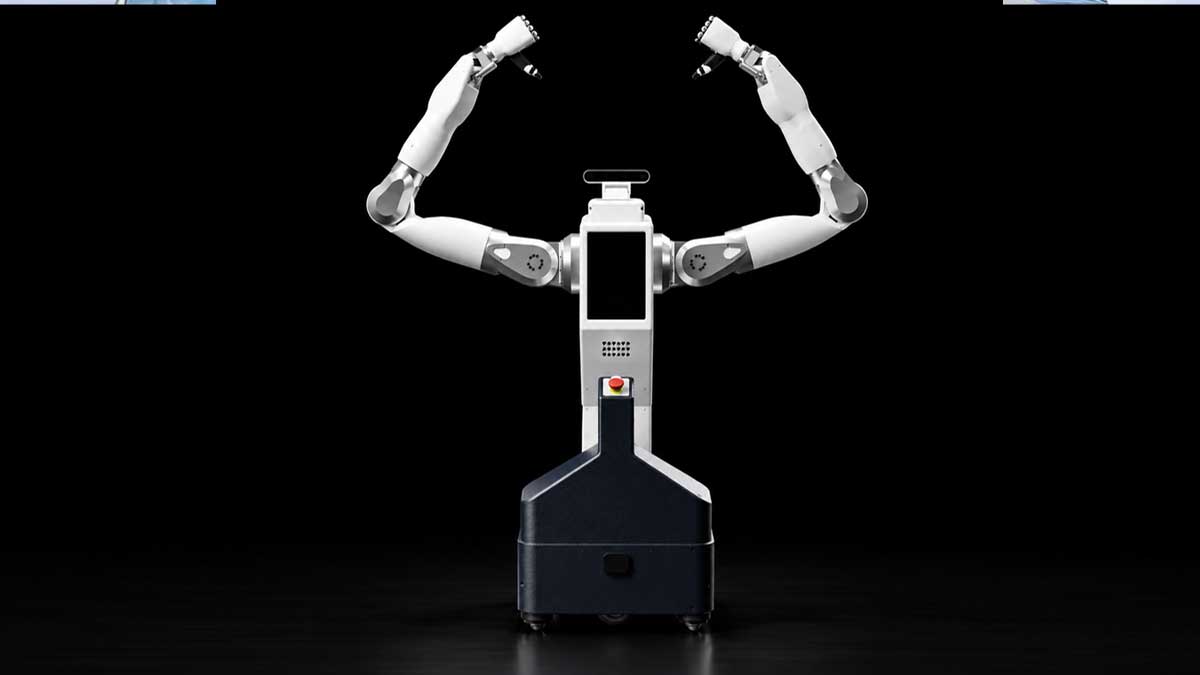
California startup Feather Robotics has emerged from stealth with a $29,990 mobile robot designed to perform tasks across industrial and commercial environments. The company has raised $7.6 million in pre-seed funding and, according to its founders, has already generated more than $1 million in revenue.
Feather describes its product as a new type of robot aimed at companies that need capable machines without the six-figure prices associated with many advanced robotic systems. The company said it built “a new kind of robot for the underdogs,” pointing to a market that has traditionally sat between systems costing around $100,000 and cheaper robots that are not designed for extended deployment.
The company is entering a growing market for lower-cost humanoid and mobile robots. Nori A3, a wheeled humanoid developed by a small team and assembled in San Francisco, sells for $1,688, while PrimeBOT has introduced two home robots in China starting at about $2,750. Unitree’s R1 starts at $4,900. At the higher end, some advanced industrial robots can still cost more than $100,000, including machines recently launched by Faraday Future priced from $9,990 to $137,900.
Feather’s machine is technically classified as a bimanual mobile manipulator rather than a conventional walking humanoid. It has two seven-degree-of-freedom arms, each with a reach of about one meter. Its torso can move vertically by 60 centimeters, allowing the robot to reach objects on the floor as well as items stored on higher shelves.
The robot moves on a wheeled base capable of traveling in any direction at approximately normal human walking speed. Altogether, the system has 23 degrees of freedom and weighs 105 kilograms.
Power comes from two hot-swappable 48-volt batteries. Feather says the batteries provide up to 10 hours of operation. The robot can also be equipped with different end-effectors, including six-degree-of-freedom hands or parallel-jaw grippers, depending on the application.
One of Feather’s main differences is its approach to computing and artificial intelligence. Rather than locking customers into a single computing platform or AI system, the company allows them to select Nvidia Jetson hardware ranging from Nano to Thor. Customers can also choose the physical AI models they want to use, including systems from Nvidia, Skild and Physical Intelligence.
That modular approach means Feather is concentrating primarily on the physical robot while leaving the intelligence layer open to developers and customers. Co-founder Hoa Mai described the strategy as creating the “Android of robotics,” arguing that companies should be able to build on a deployable hardware platform rather than being restricted to a closed system.
“You can’t buy a Tesla robot today and develop on top of it,” Mai told TechCrunch. He said Feather concluded that successful hardware companies such as Nvidia and Apple began with products that worked and could be deployed before adding greater complexity over time.
The company’s hardware-first strategy also reflects a broader effort among smaller robotics teams to reduce costs through simpler designs and software. Nori founder Antonio Li and colleagues described in an arXiv paper how Nori A3 uses commodity serial-bus servos rather than more expensive motors. Software helps protect the components from burnout, while grip-force estimates can be derived from the servos’ current readings instead of requiring additional force sensors.
According to the researchers, that approach allows Nori’s robot to use only about one-fifth of the parts cost of the least expensive comparable research platform. Their work argues that some capabilities normally sacrificed at lower price points can instead be restored through software rather than more expensive hardware.
Component costs are also falling as robotics manufacturing scales. Goldman Sachs reported that humanoid manufacturing costs declined 40% in a single year as production increased and key components became more widely commoditized. Simpler mechanical designs, including wheeled platforms instead of legged robots, can further reduce complexity and expense.
Feather has made simplicity a central part of its design philosophy. The company argues that robotics systems can accumulate failure risks as more components are connected together, meaning fewer parts can contribute to simpler, more reliable and less expensive machines.
According to Feather, its robots have already been operating in real-world environments for about a year, including manufacturing and food service. The company was founded by Hoa Mai, who previously sold a humanoid robotics startup to 1X, and Parsa Bakhtiari, a former Tesla Model 3 engineer.
Gradient Ventures led the company’s funding round, with BuilderVC, Geometry, SEED Innovations and Virgo VC also participating.



Related Articles

Xiaomi 18 Pro Max Pushes Into Premium Global Phone Market
Xiaomi is expanding its premium smartphone ambitions beyond China with the Xiaomi...
Epson Launches Three New 4K Laser Home Cinema Projectors
Epson has introduced three new laser-powered home cinema projectors aimed at movie...
MCHOSE ACE 75 Hall Effect Gaming Keyboard Launches on Kickstarter
MCHOSE has launched its ACE 75, a new 75% Hall Effect gaming...

ExpressVPN Launches Fortify Router With 1-Year Advanced Plan
ExpressVPN has introduced Fortify, a new secure wireless router designed to replace...
Leave a comment