





Doomsday Glacier: Scientists Warn of Rapid Sea Level Rise Threat
 193cc Agency CouncilMay 22, 20242 Mins read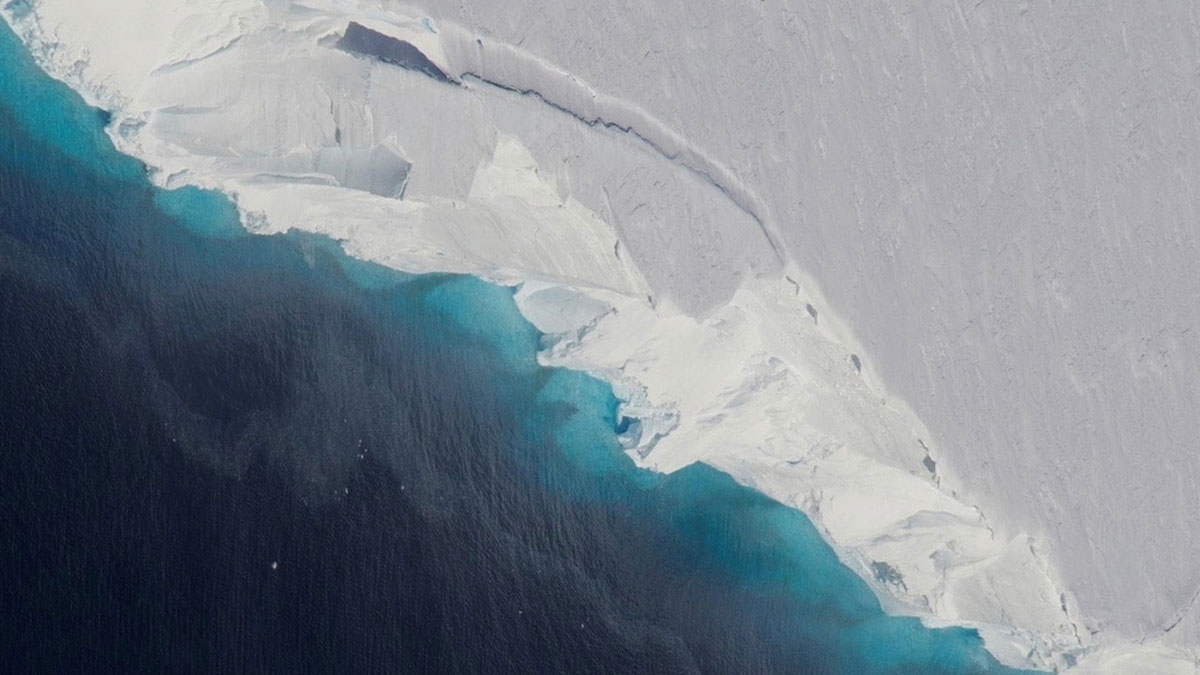
The Thwaites Glacier in West Antarctica, often called the “Doomsday Glacier,” is a critical concern for scientists due to its potential to cause catastrophic sea level rise. Research from Pennsylvania State University suggests that if the glacier collapses, it could lead to the disintegration of the Western Antarctic Ice Sheet, resulting in significant increases in sea levels. Recent studies indicate that the glacier is melting at a faster rate than previously thought, adding to concerns about its stability.
The Thwaites Glacier currently contributes about 10% of the global sea level rise. Its collapse could lead to a sea level rise of approximately 65 centimeters (about two feet) over a short period. This rapid rise would be particularly devastating for coastal cities like New York City, Miami, Shanghai, and Mumbai, potentially displacing millions of residents and causing widespread economic and social disruption.
Covering an area comparable to Florida, the Thwaites Glacier is the widest in the world and is Antarctica’s most vulnerable glacier. Its vulnerability is attributed to its location on a downward-sloping bed, allowing warm ocean water to erode it from below. The glacier’s retreat began in the 1940s, likely triggered by a strong El Niño event, and has been exacerbated by human-caused climate change.
A recent study published in the Proceedings of the National Academy of Sciences revealed that warm, salty water is penetrating deep beneath the Thwaites Glacier, causing significant melting. This intrusion of warm water, reaching up to 3.7 miles beneath the glacier, suggests that sea levels could rise to catastrophic levels much sooner than previously anticipated, possibly within the next 10 to 20 years.
Predicting the exact timeline for the glacier’s collapse remains challenging. While some estimates suggest a collapse could occur within the next five years, others indicate a broader timeframe of 200 to 900 years. The potential consequences of a collapse are dire, with sea levels rising by three feet by 2070 in a worst-case scenario, according to some experts.
The potential collapse of the Thwaites Glacier poses a significant threat to coastal and low-lying areas worldwide. Around 900 million people, or 10% of the global population, are at extreme risk from rising sea levels. Already, communities like Garbi Sugdub in Panama and Taholah in Washington are experiencing the impacts of rising seas, with residents forced to relocate due to encroaching waters.
Researchers emphasize the urgent need for more comprehensive data to understand and predict the glacier’s behavior. Continued research and mitigation efforts are crucial to address the impacts of climate change on polar ice sheets and global sea levels.






Related Articles

Nor’easter Forces Cancellations of Major East Coast Events
A powerful nor’easter approaching the U.S. East Coast has led to the...

Pope Leo Welcomes Press Amid Trump White House Media Ban
Pope Leo XIV said Friday that journalists covering his trip to France...

Lewis Hamilton Backs Macklemore Amid Ed Sheeran Tour Dispute
Formula 1 driver Lewis Hamilton has publicly expressed support for Macklemore after...


Elon Musk Attacks ‘Musk’ Director Alex Gibney Over Documentary
Elon Musk has launched a series of attacks against Oscar-winning filmmaker Alex...
Leave a comment