





China Challenges Starlink’s Space Dominance: From Laser Breakthroughs to Simulated Takedowns
 193cc Agency CouncilJanuary 14, 20251 Mins read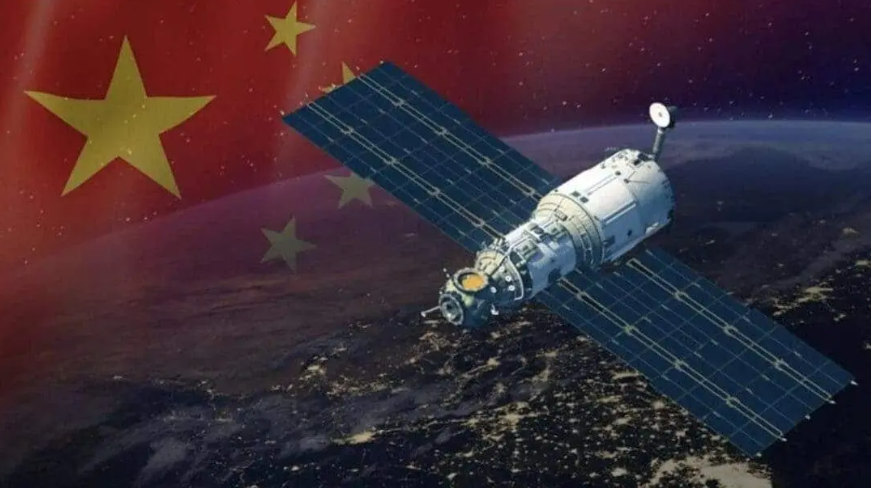
In a significant development that could reshape the future of satellite communications and space warfare, Chinese scientists and companies have made bold moves to challenge Elon Musk’s Starlink dominance. Chang Guang Satellite Technology Co. has achieved a groundbreaking 100 Gbps space-to-ground laser transmission, surpassing Starlink’s capabilities and potentially paving the way for 6G technology.
The achievement, which is ten times faster than their previous record, involved successful data transmission between a mobile truck-based ground station and one of the 117 satellites in the Jilin-1 constellation. This technological leap positions China ahead of Starlink in the race for advanced satellite communication technologies, particularly in ground-to-satellite laser communications.
In a more concerning development, Chinese scientists have conducted simulation operations targeting the Starlink constellation. A team led by Wu Yunhua from Nanjing University of Aeronautics and Astronautics demonstrated that approximately 1,400 Starlink satellites could be approached by just 99 Chinese satellites within 12 hours. The simulation, published in Systems Engineering and Electronics, utilizes a novel binary AI algorithm inspired by whale hunting strategies.
China’s aggressive stance toward Starlink stems from its military implications, particularly highlighted during the Russia-Ukraine conflict. The Chinese military views Starlink as a potential threat to its space security and regional operations, especially concerning Taiwan. In response, China has launched its own satellite mega-constellation projects – Qianfan, Guo Wang, and Honghu-3 – aiming to deploy 38,000 satellites to rival Starlink’s network.
The competition intensified in August 2024 when China launched its first batch of 18 satellites for the “Thousand Sails Constellation,” with plans to deploy 648 satellites by 2025. This state-backed initiative represents China’s determination to establish its own global internet infrastructure while maintaining control over information flow to its citizens.
- 6G technology
- AI algorithm
- Chang Guang Satellite
- China
- commercial satellites
- cyber security
- defense technology
- Digital Infrastructure
- digital sovereignty
- digital warfare
- Elon Musk
- global communications
- global internet
- International Relations
- internet infrastructure
- Jilin-1 constellation
- laser communication
- laser transmission
- military applications
- military strategy
- military technology
- national security
- orbital assets
- Qianfan project
- remote sensing
- satellite communications
- satellite constellation
- satellite defense systems
- satellite internet
- satellite network
- satellite operations
- satellite simulation
- satellite technology
- satellite tracking
- space capabilities
- space competition
- space defense
- space dominance
- space industry
- space infrastructure
- Space Innovation
- space militarization
- space policy
- space race
- space security
- space technology
- space warfare
- space warfare simulation
- space-based communications
- SpaceX
- Starlink
- Taiwan conflict
- Technological Advancement
- Telecommunications
- Thousand Sails Constellation
- Wu Yunhua






Related Articles

Nor’easter Forces Cancellations of Major East Coast Events
A powerful nor’easter approaching the U.S. East Coast has led to the...

Pope Leo Welcomes Press Amid Trump White House Media Ban
Pope Leo XIV said Friday that journalists covering his trip to France...

Lewis Hamilton Backs Macklemore Amid Ed Sheeran Tour Dispute
Formula 1 driver Lewis Hamilton has publicly expressed support for Macklemore after...


Elon Musk Attacks ‘Musk’ Director Alex Gibney Over Documentary
Elon Musk has launched a series of attacks against Oscar-winning filmmaker Alex...
Leave a comment