





College Admissions Face Growing Calls for Greater Transparency
 193cc Agency CouncilJuly 6, 20263 Mins read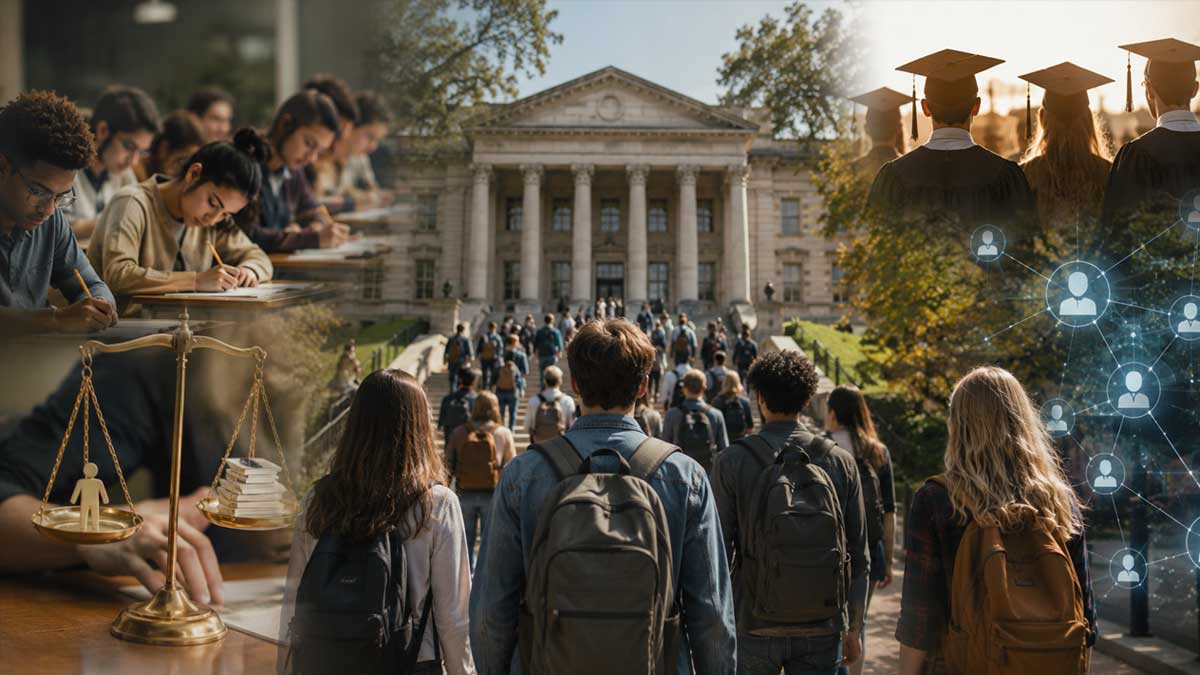
Colleges and universities across the United States are facing renewed scrutiny over admissions practices as critics argue that many policies promoted as expanding student opportunity also advance institutional interests. While measures such as test-optional admissions, holistic reviews, athletic recruiting, international enrollment and enrollment management are often presented as improving fairness and accessibility, they also help institutions increase applications, maintain enrollment, strengthen finances and build alumni support.
Universities routinely balance educational goals with financial pressures, demographic changes, legal requirements and long-term institutional priorities. The issue raised by critics is not that colleges pursue those objectives, but that admissions policies are frequently described as benefiting applicants without fully acknowledging the institutional advantages they also provide. As admissions decisions increasingly rely on subjective evaluations rather than standardized academic benchmarks, concerns about transparency have intensified.
At the same time, faculty members at several universities have reported that more incoming students are arriving less prepared for college-level coursework. More than 1,800 mathematics and science professors across the University of California system recently signed an open letter warning that growing numbers of students lack the mathematical foundation required for introductory STEM courses. Faculty at UC San Diego also reported a sharp rise in students placing below high school mathematics levels within a few years. Similar concerns have been voiced at Harvard and other highly selective institutions, where professors say some students struggle with lengthy reading assignments, analytical writing and core academic skills.
Observers note that no single admissions policy is responsible for these trends. Pandemic-related learning loss, declining K-12 academic performance, grade inflation, changing reading habits, artificial intelligence and demographic shifts have all contributed to the challenges. However, the growing reliance on admissions decisions based on institutional judgment has prompted calls for greater examination of how those decisions are made.
The expansion of test-optional admissions during the COVID-19 pandemic was initially driven by widespread testing disruptions. Although many institutions have retained the policy in subsequent years, supporters continue to cite equity and accessibility as key reasons. Critics point out that test-optional admissions also provide colleges with greater flexibility in shaping incoming classes, increase application numbers and help maintain enrollment during a period of declining demographics.
Athletic recruiting has likewise been defended as rewarding leadership, teamwork and discipline while strengthening campus life. At the same time, successful athletic programs can generate media attention, attract alumni donations and increase applications. Critics also argue that athletic admissions preferences often benefit students whose families can afford years of club sports, specialized coaching and national competitions.
Legacy admissions have traditionally been justified as preserving alumni relationships and institutional traditions. However, they are also viewed as strengthening connections with families that frequently become major donors and long-term financial supporters. Similarly, modern enrollment management relies on predictive models that estimate not only which applicants should be admitted but also how much financial aid they are likely to need to maximize enrollment, making scholarships part of broader pricing and revenue strategies.
International students continue to play an important role in expanding cultural diversity on American campuses, but they also represent a significant source of tuition revenue for many institutions, particularly as domestic enrollment declines. Critics argue that both educational and financial motivations should be acknowledged openly.
Collectively, these developments have reduced the role of objective admissions benchmarks while expanding institutional discretion. Grade inflation has made GPAs harder to compare, artificial intelligence has complicated the evaluation of admissions essays, high schools differ widely in grading standards, and standardized testing is now optional at many colleges. Even Advanced Placement exams have become part of the discussion. John Moscatiello, founder of Marco Learning, questioned the trend, stating, “The College Board has argued for years that grade inflation is rampant in schools, and that objective standards like the SAT and Advanced Placement Exams provide a stable measure of student success. But through aligning AP scores to college grades, is the College Board pegging its currency to another currency that is experiencing its own runaway inflation?”
Some faculty members have described modern admissions as increasingly becoming “a black box,” arguing that greater transparency is essential to maintaining public confidence. Critics say the issue is not whether colleges should pursue financial stability, diverse student populations, competitive athletic programs or international enrollment, but whether they should be more open about how those priorities influence admissions decisions. They also contend that institutions relying more heavily on subjective evaluations should be prepared to explain their decision-making processes and demonstrate that their admissions policies are delivering the academic outcomes they promise.






Related Articles

P-TECH Model Offers Blueprint for America’s AI Workforce Shift
As artificial intelligence reshapes the workplace, experts argue the United States needs...

New Student Loan Rules Bring Major Changes for Future Borrowers
New federal student loan regulations took effect on July 1, introducing significant...

Google AI Tutor Shows Strong Learning Gains in Classroom Trial
Google DeepMind has released findings from a classroom study in Sierra Leone...


High School Graduation Standards Face an AI-Era Overhaul
As graduation ceremonies take place across the United States, millions of students...
Leave a comment