





NASA Reveals Crater Left by SpaceX Falcon 9 on the Moon
 193cc Agency CouncilAugust 19, 20261 Mins read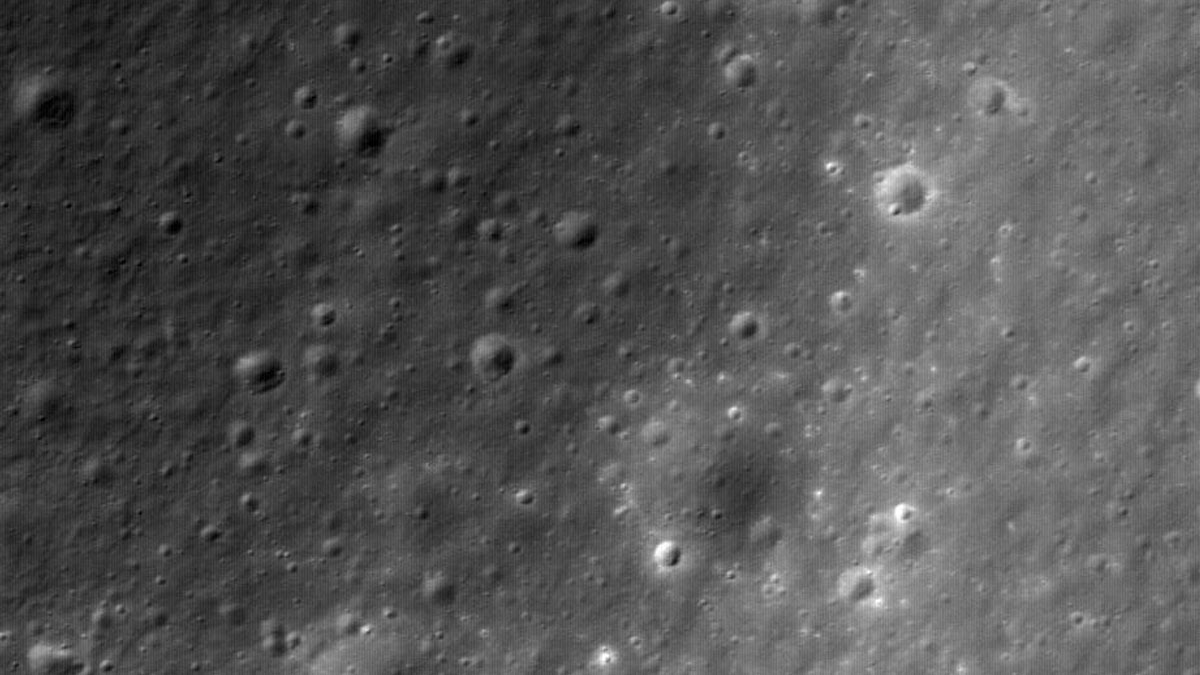
NASA has released before-and-after images showing the impact site where an unmanned SpaceX Falcon 9 rocket struck the moon earlier this month. The photographs, captured by NASA’s Lunar Reconnaissance Orbiter, reveal a broad but relatively shallow crater along with trails of dust and rocks scattered across the lunar surface.
The orbiter photographed the location last week from an altitude of about 60 miles above the moon. NASA waited six days for the moon to rotate enough to bring the impact area into view before capturing the new images.
According to NASA’s analysis of the crater’s shadow, the impact created a depression approximately 60 feet across and less than 10 feet deep. The Lunar Reconnaissance Orbiter’s narrow-angle camera is capable of identifying lunar surface features measuring as little as three feet wide, allowing scientists to examine the relatively small impact site in detail.
The Falcon 9 was launched in early 2025 as part of a one-way mission intended to transport lunar landers into deep space. Because the rocket did not have enough fuel to return to Earth and burn up during atmospheric reentry, it remained in space for several months. The moon’s gravity eventually altered its trajectory, sending the spent rocket into the lunar surface.
The rocket is believed to have hit the moon at a speed exceeding 5,000 mph. Its impact adds to a long history of spacecraft and rocket debris striking the lunar surface since the 1960s.
Other recent lunar impacts have included Russia’s Luna-25 mission, which crashed in 2023, and a spent Chinese rocket body that hit the moon in 2022. Some lunar impacts have also been deliberate. In 2009, NASA intentionally crashed a probe into the moon’s southern polar region in an experiment that detected at least 25 gallons of water.






Related Articles
96% ‘Blood Moon’ Eclipse Will Light Up Skies on Aug. 27-28
Skywatchers have another major celestial event to look forward to later this...

July New Moon Begins Countdown to August 12 Total Solar Eclipse
The new moon arriving at 5:43 a.m. EDT on Tuesday, July 14,...

China’s Tianwen-2 Reaches Earth’s Rare Quasi-Moon Asteroid
China’s Tianwen-2 spacecraft has successfully arrived at 469219 Kamoʻoalewa, also known as...


Strawberry Moon Lights Up Skies With Lowest Full Moon of 2026
Skywatchers across North America will have the chance to witness June’s full...
Leave a comment