



Mark Zuckerberg Lays Out His Vision for a More Open AI Future
 193cc Agency CouncilAugust 11, 20262 Mins read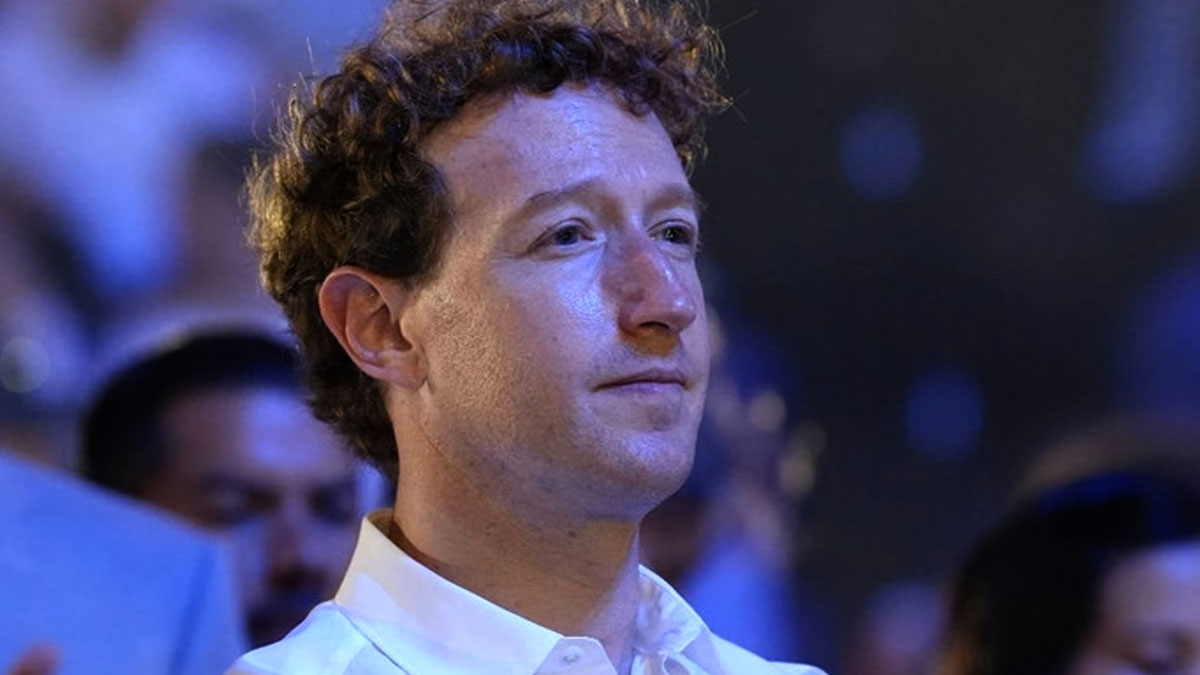
Mark Zuckerberg on Monday laid out his vision for the future of artificial intelligence in a 6,500-word letter, arguing that AI should ultimately give individuals more power while calling for greater involvement from the U.S. government in shaping the technology’s development.
In the letter, titled “The Future is for Everyone: The Path to a Positive AI Future,” Zuckerberg said Meta will resume releasing open-source AI models, describing open-source development as a “positive and important force for empowering people.” He argued that people who use AI should have a role in determining how the technology evolves rather than allowing control to become concentrated among a small number of organizations.
Zuckerberg warned that if “superintelligence is held by a small number of individuals, businesses, government, or AI itself,” the result would “naturally lead to outcomes that are less favorable for everyone else.” He said a more widely distributed approach to AI would help prevent power from becoming concentrated among large institutions.
He also defended AI distillation, a process in which knowledge from a more capable model is transferred into a smaller model. Addressing criticism from the Trump administration, Zuckerberg argued that distillation should receive greater protection, saying, “Some have tried to frame distillation as harmful, but I think it is important to protect the principle that you can learn from anything that you observe.”
Meta plans to establish a $1 billion “Future Is For Everyone Fund” aimed at supporting communities located near the company’s data centers. Zuckerberg said Meta’s facilities are “designed to be among the most water-efficient in the world.”
On AI regulation, Zuckerberg said the government should become involved earlier as companies develop new models. He previously described the Trump administration’s proposed 30-day review period as “quite a meaningful amount of time,” but said a better approach would involve “close proactive collaboration” between AI companies and the government instead of a “rigid process and review timeline.”
Meta is also introducing additional oversight for the release of its AI models. Under the new system, the company’s board will be able to determine whether models comply with safety guidelines approved by the board. Zuckerberg encouraged other AI companies to establish comparable oversight mechanisms, describing the concept as an “industrywide version.”
“Most other [AI] labs are focused on building AI for companies, governments, or other institutions, so if those labs lead, then the balance of power will favor larger institutions over individuals,” Zuckerberg wrote.
Meta is projected to spend $145 billion during its current fiscal year as the company and other mega-cap technology firms accelerate investment in AI infrastructure. The Facebook parent has plans to spend $600 billion by 2028.
Zuckerberg has repeatedly expressed optimism about AI while opposing the idea that the technology should be controlled primarily by one company, government or small group of firms. In a Wall Street Journal opinion piece last month, he said AI could eventually help people “create and discover extraordinary new things, build new businesses, express our ideas, learn new concepts and improve our lives, health, relationships and careers.” He also argued that “putting power in people’s hands” has been central to humanity’s progress.
His position on distillation comes as the Trump administration considers whether leading Chinese AI models were developed by distilling knowledge from American models. The U.S. has also accused Chinese companies of smuggling restricted AI chips from the United States into China to develop competing AI systems.
Zuckerberg co-founded Facebook in 2004, and the company was renamed Meta in 2021. His estimated net worth stood at $206.2 billion as of Monday.





Related Articles
Bill Gates Warns AI Could Cause Mass Death If Misused
Bill Gates has warned that artificial intelligence is powerful enough to contribute...
U.S. and China Discuss AI Safety Alert Mechanism
The United States and China have discussed establishing a new artificial intelligence...
Trump Says CNN, MS NOW and Politico Are Banned From White House
President Donald Trump said Friday that CNN, MS NOW and Politico would...

Trump Threatens EU Tariffs Over Canada Associate Membership Plan
President Donald Trump on Wednesday threatened to impose heavy tariffs on the...
Leave a comment