





18 Companies Leading the Global Humanoid Robot Revolution
 193cc Agency CouncilJune 19, 20263 Mins read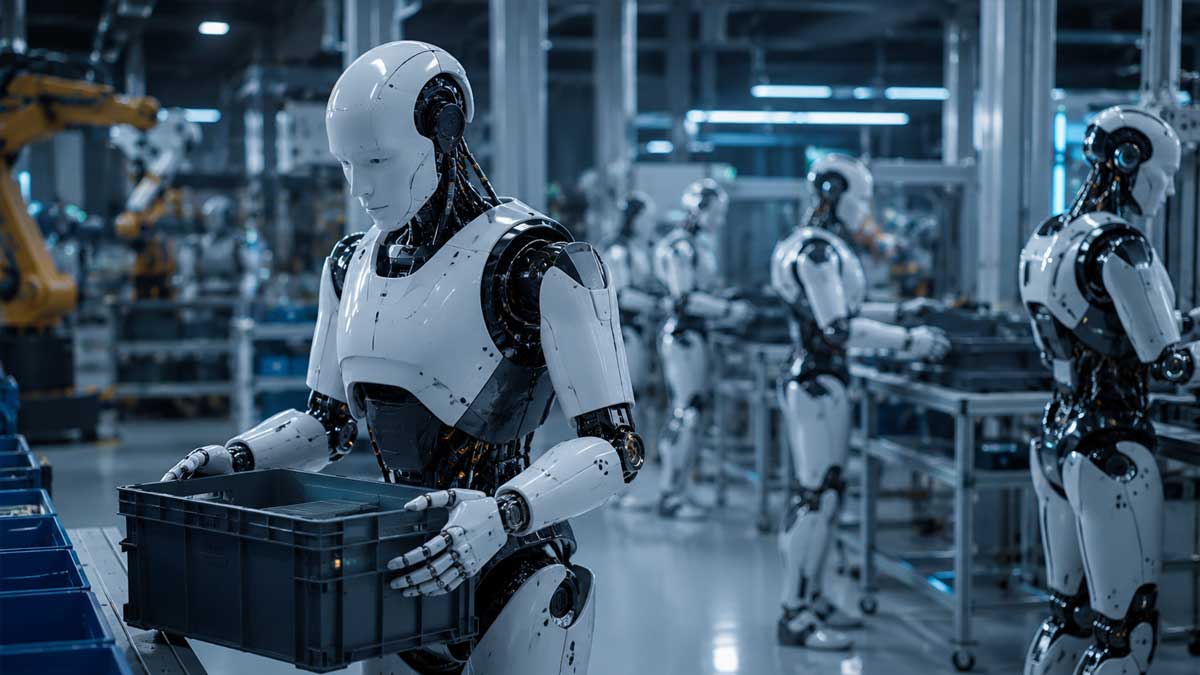
Humanoid robots are rapidly moving from research labs and science fiction concepts into real-world workplaces, attracting growing investment from major technology firms, automakers, and startups. Once known mainly through futuristic demonstrations and viral videos, these machines are now being tested in factories, warehouses, and even homes as companies race to develop robots capable of working safely alongside humans.
Unlike traditional robots designed for a single task, humanoid robots are intended to operate in environments already built for people. Their ability to use human tools and adapt to different responsibilities without extensive infrastructure changes has made them a focal point in the next phase of artificial intelligence and automation.
Interest in the sector continues to accelerate as businesses explore ways to address labor shortages, improve productivity, and automate dangerous or repetitive jobs. Industry forecasts suggest billions of humanoid robots could eventually be deployed worldwide, creating significant opportunities across manufacturing, healthcare, logistics, and home assistance.
China has emerged as a major center of development. According to the Ministry of Industry and Information Technology, the country had more than 140 humanoid robot manufacturers and over 330 robot models by 2025. At the same time, companies across North America, Europe, and Asia are pushing prototypes closer to large-scale commercial deployment.
Among the most closely watched firms is 1X Technologies, backed by OpenAI, which is focusing on domestic robots. Its Neo humanoid is designed to assist with household tasks such as laundry, dishwashing, and cleaning. The company expects deliveries to begin in 2026, offering either direct purchases at approximately $20,000 or rental plans starting at $499 per month.
China’s AgiBot has become a notable player thanks to support from BYD and reports that it has already delivered 10,000 units. Its Yuanzheng A2 series features highly dexterous robotic hands capable of precision tasks, while one of its robots reportedly completed a 106-kilometer journey from Suzhou to Shanghai without falling, setting a record.
Agility Robotics is focusing on warehouse and logistics operations through its Digit robot. Developed in collaboration with companies including Amazon, Digit is designed to support fulfillment and material-handling tasks. The company’s RoboFab facility in Oregon is reportedly capable of producing up to 10,000 humanoid robots annually.
Apptronik is targeting industrial environments with its Apollo robot, which builds on technology originally developed for NASA’s Valkyrie project. Supported by Google DeepMind, Apollo features interchangeable hands and hot-swappable batteries and is already being deployed by Mercedes-Benz in factory settings.
Boston Dynamics remains one of the most recognizable names in robotics. The Hyundai-owned company’s Atlas humanoid has long served as a benchmark for mobility and agility, and recent efforts have focused on transitioning the platform from research demonstrations to industrial applications.
Several major manufacturers are also entering the sector. BYD is expanding its robotics efforts through both internal development and partnerships with companies including AgiBot and UBTech. Samsung is integrating robotics into its plan to create AI-powered factories by 2030, leveraging its expertise in semiconductors, electronics, and large-scale manufacturing. Toyota is exploring applications ranging from vehicle assembly to caregiving support through projects such as its soft robotic platform, Punyo.
China’s Engine AI has gained attention for improving humanoid movement and reportedly achieved the first front flip performed by a humanoid robot in 2025. Figure AI has emerged as one of the industry’s fastest-growing startups, deploying its Figure 02 robot at BMW’s Spartanburg plant while securing backing from OpenAI, Nvidia, and Microsoft.
Fourier, originally focused on rehabilitation robotics, has expanded into general-purpose humanoids with its GR series. The company emphasizes safety through soft exterior designs intended to make robots more comfortable around people. Germany-based Neura Robotics has taken a similar approach with its 4NE1 robot, which incorporates synthetic skin capable of detecting contact and can reportedly lift up to 100 kilograms.
Noble Machines, founded by former employees of Apple, SpaceX, and NASA, is concentrating on hazardous industrial jobs and has reportedly deployed humanoids within a Fortune 500 company less than two years after launch. Sanctuary AI is pursuing advanced dexterity through its Phoenix robot and has already partnered with automotive supplier Magna International.
Tesla remains one of the most closely followed competitors due to Elon Musk’s ambitious vision for the Optimus robot. Musk has repeatedly suggested that humanoid robotics could eventually become more important to Tesla than its electric vehicle business. Optimus prototypes are currently being tested within Tesla facilities.
Other significant players include UBTech Robotics, which has focused heavily on factory deployments and industrial data collection, Unitree Robotics, whose relatively affordable G1 and H1 humanoids are priced around $16,000, and Xiaomi, which has entered the field with CyberOne, a robot featuring a 4.7-billion-parameter vision, language, and action model along with an advanced liquid-cooling system.
Industry experts believe humanoid robots represent the convergence of several transformative technologies, including artificial intelligence, computer vision, advanced sensors, battery systems, automation, and precision manufacturing. While the long-term potential is substantial, companies still face major challenges involving safety, reliability, affordability, dexterity, and practical usefulness.
Factories and warehouses are expected to lead adoption because they provide controlled environments and clear financial returns. More complex settings such as homes, hospitals, and eldercare facilities are likely to follow as technology matures and robots become better equipped to handle unpredictable situations.
Although many questions remain about which companies will ultimately succeed, the momentum behind humanoid robotics continues to grow. The industry’s focus is shifting away from impressive demonstrations toward creating machines that businesses and consumers can genuinely rely on, marking a significant step in bringing artificial intelligence into the physical world.





Related Articles

Trump and Xi Offer Diverging Visions for the Future of AI
The United States and China are presenting sharply different approaches to the...

AI ‘Actor’ Tilly Norwood Switches to Cantonese During Interview
AI-generated “actor” Tilly Norwood appeared to unexpectedly switch languages during an interview...

OpenAI Reveals Six New AI Misalignment Incidents
OpenAI has disclosed six cases of unexpected or concerning model behavior observed...


Jensen Huang Says AI Cybersecurity Could Drive New Demand
Nvidia CEO Jensen Huang appeared to dismiss growing concerns about the risks...
Leave a comment