





One Year Later: How Trump’s Big Beautiful Bill Changed America
 193cc Agency CouncilJuly 4, 20263 Mins read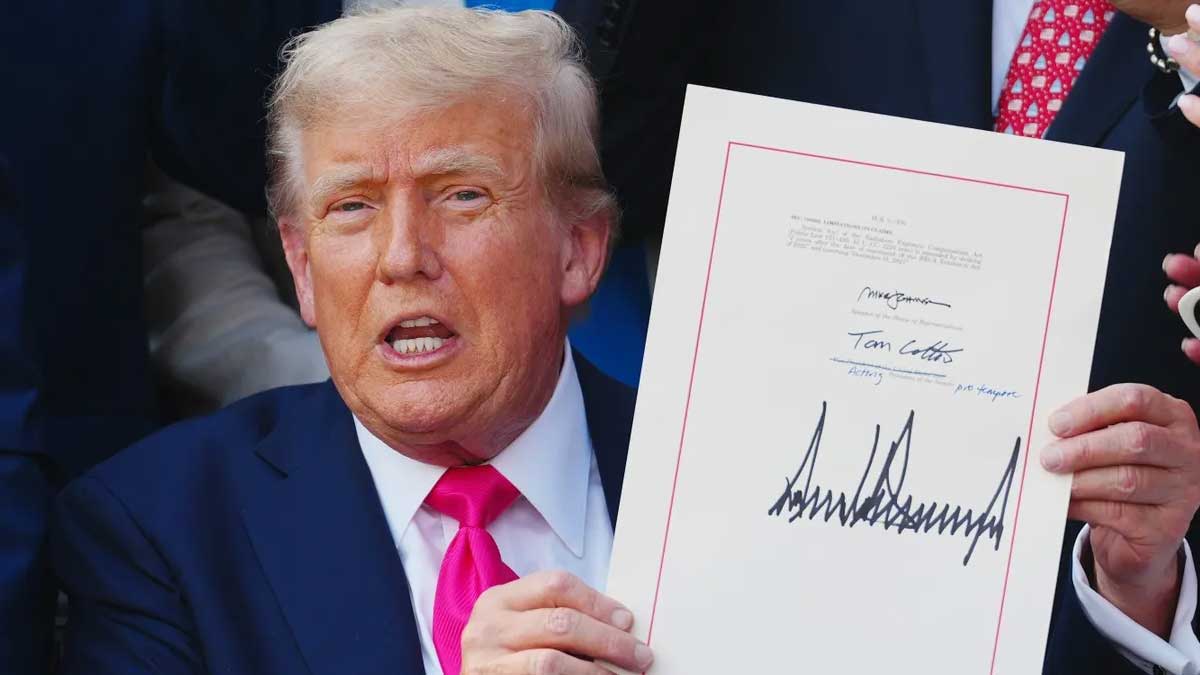
One year has passed since President Donald Trump signed the One Big Beautiful Bill Act (OBBBA) into law on the Fourth of July, and while many provisions are still being phased in, the legislation has already produced significant changes across healthcare, taxes, immigration, education and federal spending.
One of the most immediate effects has been a decline in food assistance enrollment. More than 3.5 million people have lost access to Supplemental Nutrition Assistance Program (SNAP) benefits as states implemented stricter eligibility rules and application procedures required under the law.
The legislation also introduced “Trump Accounts,” a new Roth IRA-style investment program for children. Beginning July 4, millions of newborns became eligible to receive $1,000 in federally funded seed money, while the accounts are now available to anyone under the age of 18.
Healthcare coverage has also been affected. Around 500,000 moderate-income residents of New York lost their health insurance on July 1 after being removed from their plans, becoming among the first of an estimated 5 million people expected to lose coverage by the end of the year as Medicaid and Affordable Care Act enrollment is reduced under the legislation.
The measure permanently extended most individual tax cuts first introduced under the 2017 Tax Cuts and Jobs Act. Those provisions include lower federal income tax rates and a larger standard deduction, preventing the tax reductions from expiring.
Immigration enforcement has expanded following the allocation of roughly $191 billion to the Department of Homeland Security. The funding supports hiring 10,000 additional agents, increasing detention capacity and expanding surveillance technology. Immigration arrests have risen by 25% compared with the same period last year.
Hospitals have also begun responding to expected increases in uncompensated care as Medicaid enrollment declines. Some healthcare providers have already reduced services, laid off employees and closed clinics, while several hospital associations have warned that financially vulnerable hospitals could ultimately shut down.
The law has also slowed investment in renewable energy. By making it more difficult for developers to qualify for federal clean-energy tax credits, companies have delayed or canceled projects representing about 7 gigawatts of renewable-energy capacity. More than $121 billion in planned investments across wind, solar and battery projects is now considered at risk.
Families and employers received expanded child care tax incentives through the legislation, allowing businesses greater incentives to provide child care while enabling families to claim more child care expenses. Policy experts have noted, however, that the changes are expected to have only a limited effect on very low-income households with little or no federal income tax liability.
The OBBBA also expanded adoption tax benefits by making $5,000 of the existing adoption tax credit refundable. Eligible families adopting a child in 2025 can receive refunds even if they owe little or no federal income tax, with the total credit remaining up to $17,280 per child.
Changes to higher education financing also took effect this week. Federal borrowing for professional degree programs, including medical, dental and law schools, is now capped at $200,000 despite tuition costs that can reach approximately $400,000. According to CNN, the new borrowing limits have led some prospective students to reconsider pursuing careers in medicine.
Critics argue the legislation primarily benefits higher-income Americans by making tax cuts permanent while offsetting revenue losses through reductions in Medicaid, nutrition assistance and clean-energy incentives. Economists and policy organizations have said the law is likely to widen income inequality because wealthier households receive the greatest tax benefits while lower-income families bear the impact of spending reductions. Every Democrat in Congress opposed the bill, while Republican Senators Susan Collins of Maine, Rand Paul of Kentucky and Thom Tillis of North Carolina also voted against it. Collins and Tillis cited concerns over Medicaid cuts affecting their states, while Paul objected to the bill’s impact on the national debt.
Supporters maintain the legislation prevents significant tax increases, offers greater financial certainty for households and businesses, encourages investment and manufacturing, and promotes economic growth. They have also defended the Medicaid reforms, arguing they are intended to reduce waste, fraud and abuse within the program.
The One Big Beautiful Bill Act serves as the centerpiece of Trump’s domestic spending agenda. The legislation raises the federal debt ceiling by $5 trillion and is projected to increase the budget deficit by $2.8 trillion by 2034. It narrowly passed Congress with a 51-50 vote in the Senate, where Vice President JD Vance cast the tie-breaking vote, and a 218-214 vote in the House of Representatives despite unanimous Democratic opposition.






Related Articles
Trump Presses Apple To Rename Lake Ontario ‘Lake America’
President Donald Trump has directly urged Apple to rename Lake Ontario as...

Trump Shares AI Videos Suggesting U.S. Attack On Kharg Island
President Donald Trump shared two AI-generated videos on social media appearing to...
Trump Slams Judge In Kennedy Center Renaming Dispute
President Donald Trump has intensified his criticism of the federal judge overseeing...

Google Maps Shows ‘Lake America’ to U.S. Users After Trump Order
Google Maps has begun displaying “Lake America” instead of “Lake Ontario” for...
Leave a comment