





China’s Tianwen-2 Reaches Earth’s Rare Quasi-Moon Asteroid
 193cc Agency CouncilJuly 4, 20262 Mins read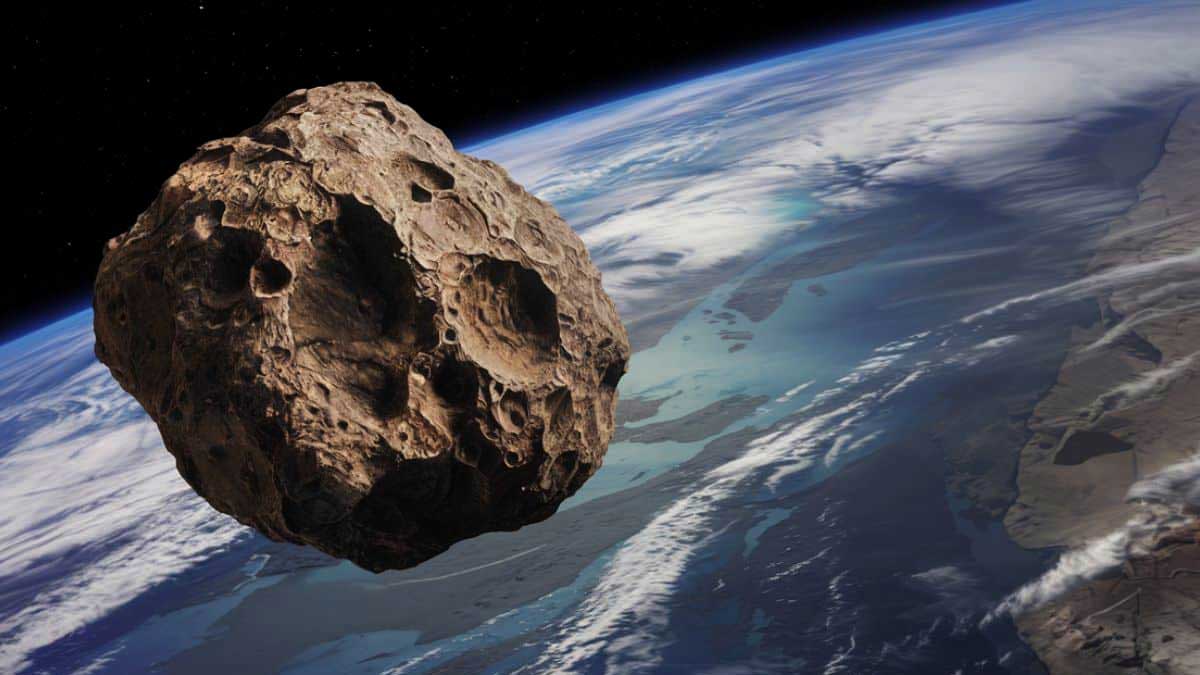
China’s Tianwen-2 spacecraft has successfully arrived at 469219 Kamoʻoalewa, also known as 2016 HO3, a rare asteroid often described as Earth’s “quasi-moon.” The probe reached the small celestial body on July 4 after traveling through space for just over 13 months, marking the start of the mission’s primary scientific operations, which include detailed exploration and the collection of samples for return to Earth.
First identified in 2016, Kamoʻoalewa measures between 130 and 330 feet (40 to 100 meters) in diameter. Depending on the final measurements taken by Tianwen-2, it could become the smallest asteroid ever explored by a spacecraft. Although it remains close to Earth over long periods, Kamoʻoalewa is not a natural moon. Instead, it is classified as a quasi-satellite, meaning it orbits the Sun while maintaining an orbital pattern that closely matches Earth’s. According to The Planetary Society, it is one of only seven known quasi-satellites sharing Earth’s orbital region. Its Hawaiian name, Kamoʻoalewa, means “oscillating celestial object.”
Launched from the Xichang Satellite Launch Center on May 28, 2025, Tianwen-2 is expected to spend about nine months studying the asteroid. Scientists believe Kamoʻoalewa could be a fragment of the Moon that was ejected into space during an ancient impact event. During its investigation, the spacecraft will map the asteroid’s surface and identify a suitable location for sample collection.
The mission is equipped with two sampling methods: a touch-and-go collection system and an anchor-and-attach mechanism fitted with drills designed to gather surface material. Researchers aim to bring back at least 100 grams of asteroid samples. Tianwen-2 is scheduled to leave Kamoʻoalewa in April 2027, with a return capsule expected to deliver the collected material to Earth in November 2027.
After completing the sample return phase, Tianwen-2 will continue its journey using a gravity-assist maneuver to travel toward comet 311P/PANSTARRS. The spacecraft is expected to reach the comet in January 2035, extending China’s deep-space exploration efforts.
The Tianwen program, whose name translates to “Heavenly Questions,” represents the China National Space Administration’s series of planetary exploration missions. Tianwen-1 successfully placed an orbiter, lander and the Zhurong rover on Mars, achieving a historic landing on May 15, 2021, and making China the second country to successfully operate a spacecraft on the Martian surface. Looking ahead, Tianwen-3 is planned for launch in 2028 with the goal of becoming the first mission to return samples from Mars, potentially delivering them to Earth in 2031. Tianwen-4 is scheduled for 2030 and will send spacecraft toward Jupiter’s moon Callisto and Uranus as part of future deep-space exploration.






Related Articles
NASA Reveals Crater Left by SpaceX Falcon 9 on the Moon
NASA has released before-and-after images showing the impact site where an unmanned...
96% ‘Blood Moon’ Eclipse Will Light Up Skies on Aug. 27-28
Skywatchers have another major celestial event to look forward to later this...

July New Moon Begins Countdown to August 12 Total Solar Eclipse
The new moon arriving at 5:43 a.m. EDT on Tuesday, July 14,...


Strawberry Moon Lights Up Skies With Lowest Full Moon of 2026
Skywatchers across North America will have the chance to witness June’s full...
Leave a comment