





July New Moon Begins Countdown to August 12 Total Solar Eclipse
 193cc Agency CouncilJuly 14, 20262 Mins read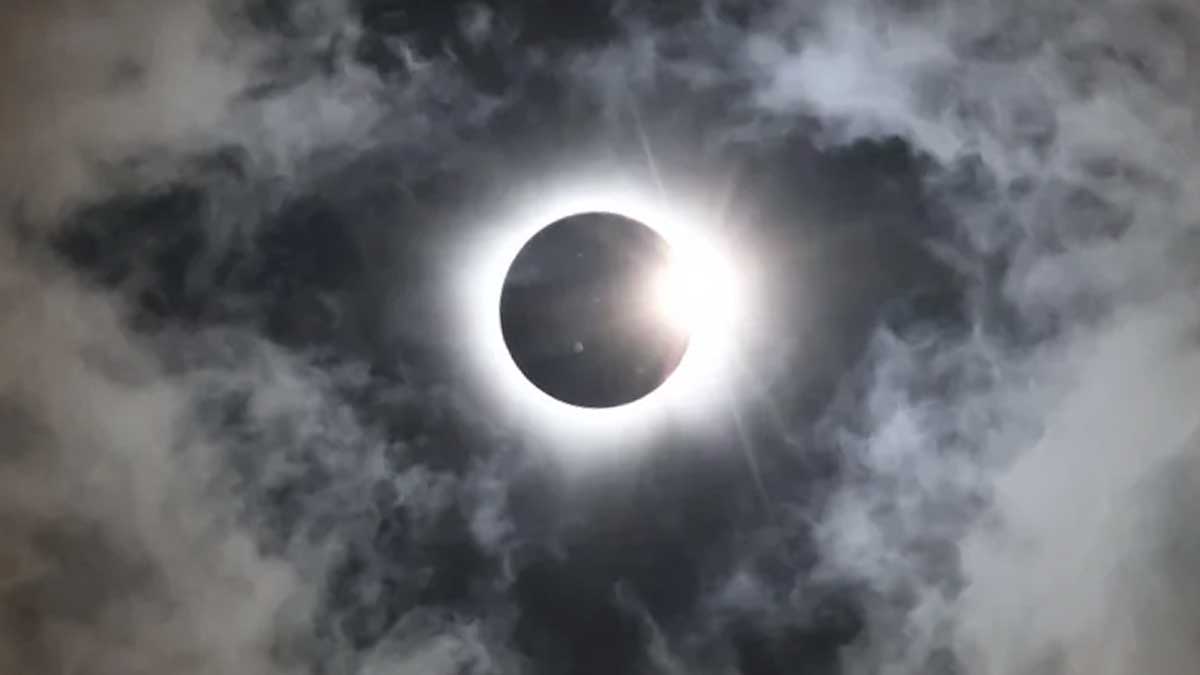
The new moon arriving at 5:43 a.m. EDT on Tuesday, July 14, marks more than the start of a new lunar cycle. It is the final new moon before the total solar eclipse on August 12, when the moon’s central shadow will cross eastern Greenland, western Iceland, the Atlantic Ocean, northern Spain and a small part of Portugal. While totality will be limited to those regions, millions of people across the Northern Hemisphere, including parts of North America, will be able to witness a partial solar eclipse. The waxing crescent moon appearing after the new moon will also signal the approach of the eclipse, while the annual Perseid meteor shower is set to begin during the same period.
On the evening of July 14, experienced skywatchers in the southern and western United States may have a chance to spot an extremely thin crescent moon illuminated by just 0.6%. The young moon will appear very low in the west-northwestern sky near Jupiter, although binoculars, an unobstructed horizon and precise timing will be required for a successful sighting.
The moon will become much easier to observe after sunset on Wednesday, July 15, when it reaches 4% illumination and climbs higher above the western horizon. Observers may also notice Earthshine, the faint glow lighting the moon’s dark portion as sunlight reflects from Earth back onto the lunar surface.
By Thursday, July 16, the waxing crescent will be about 10% illuminated and positioned near Regulus, the brightest star in the constellation Leo and the 21st brightest star visible in the night sky. Venus will appear above and to the left of the pair. On Friday, July 17, the moon will brighten to 17% illumination and shine to the left of Venus after sunset. The same day also marks the beginning of the Perseid meteor shower, which runs through August 24 and reaches its peak during the night of August 12-13, only hours after the total solar eclipse.
This particular new moon is significant because it belongs to the same eclipse season that will produce the August 12 solar eclipse. Most new moons do not create eclipses because the moon’s orbit is tilted by about five degrees relative to Earth’s path around the sun. A solar eclipse becomes possible only during an eclipse season, a period lasting about 34 to 35 days when the sun aligns near one of the lunar nodes, the two points where the moon’s orbit crosses Earth’s orbital plane.
On August 12, the Earth, moon and sun will align precisely enough for the moon to cast a narrow shadow across parts of Earth, briefly revealing the sun’s corona to observers within the path of totality. Prime viewing locations include Scoresby Sund in Greenland, western Iceland including Reykjavik, and northern Spain, where totality will occur low above the horizon near sunset.
Although the total eclipse path will not reach North America, a partial solar eclipse will still be visible across parts of the continent. St. John’s, Newfoundland and Labrador, is expected to see 53% of the sun covered, while Halifax will experience 31%, Saint John 28%, Québec City 24%, Boston 16% and New York 10%. Safe viewing will require eclipse glasses or front-mounted solar filters throughout the event. Later that same day, the Perseid meteor shower will peak under a dark sky created by the new moon, offering skywatchers across the Northern Hemisphere the opportunity to experience two major astronomical events within hours.




Related Articles
NASA Reveals Crater Left by SpaceX Falcon 9 on the Moon
NASA has released before-and-after images showing the impact site where an unmanned...
96% ‘Blood Moon’ Eclipse Will Light Up Skies on Aug. 27-28
Skywatchers have another major celestial event to look forward to later this...
China’s Tianwen-2 Reaches Earth’s Rare Quasi-Moon Asteroid
China’s Tianwen-2 spacecraft has successfully arrived at 469219 Kamoʻoalewa, also known as...

Strawberry Moon Lights Up Skies With Lowest Full Moon of 2026
Skywatchers across North America will have the chance to witness June’s full...
Leave a comment