





2026 Total Solar Eclipse Nears as Europe Prepares for Rare Event
 193cc Agency CouncilJune 23, 20262 Mins read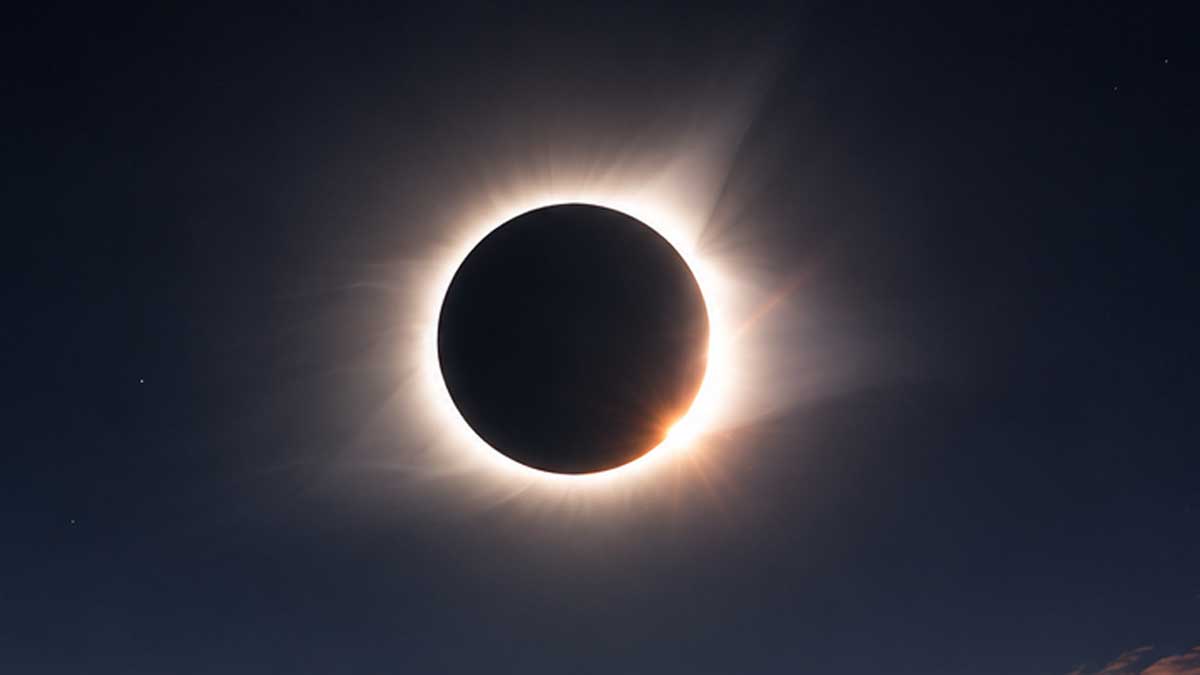
A rare total solar eclipse is just weeks away, with the celestial event set to occur on Aug. 12, 2026. On that day, the moon’s shadow will travel across parts of the Arctic, eastern Greenland, western Iceland, the Atlantic Ocean, northern Spain and a small section of Portugal, giving observers within the path of totality a chance to witness daylight briefly disappear and the sun’s corona become visible.
The eclipse will reach a maximum duration of 2 minutes and 18 seconds, with some of the longest viewing times occurring near Iceland. In Spain, the event will take place shortly before sunset, creating a dramatic viewing opportunity. Greenland is also expected to be one of the prime destinations for eclipse observers.
The event carries additional historical significance. It will be Iceland’s first total solar eclipse since 1954 and Spain’s first since 1905. Mainland Europe has not experienced a total solar eclipse since 1999, making the 2026 event one of the continent’s most anticipated astronomical spectacles in decades.
While totality will only be visible along a narrow corridor, a partial solar eclipse will be observable across much of Europe, northwestern Africa, Canada and parts of the northern United States. The timing is especially notable because Aug. 12 also coincides with the peak of the annual Perseids meteor shower, which can produce up to 100 meteors per hour under favorable conditions.
A total solar eclipse occurs when the moon passes directly between Earth and the sun, completely covering the sun’s bright surface. The phenomenon is possible because the sun is approximately 400 times larger than the moon but is also about 400 times farther away, making both objects appear nearly the same size from Earth. Although total solar eclipses occur somewhere on the planet roughly every 16 months, they are exceptionally rare for any specific location and may not return to the same area for centuries.
Astronomy enthusiasts are expected to travel to several key viewing regions. Expedition cruise operators are preparing voyages to Greenland, while western Iceland and northern Spain are expected to attract large numbers of visitors. Iceland offers the added possibility of seeing the northern lights after dark in mid-August, while Spain’s location could provide excellent opportunities to observe both the eclipse and the Perseids meteor shower. Favorable viewing conditions are anticipated in Spain’s Castile and León, La Rioja, Aragón and Balearic Islands regions.
Among the most sought-after viewing locations are Scoresby Sund in Greenland, the Snæfellsnes Peninsula, Reykjavík and the Reykjanes Peninsula in Iceland, along with the Spanish cities and regions of A Coruña, León, Burgos, Zaragoza, the Ebro Delta and S’Arenal in Mallorca.
Experts emphasize the importance of safe viewing practices. During the partial phases of the eclipse, certified eclipse glasses or solar filters must be worn at all times. Only during totality, when the moon completely obscures the sun, is it safe to view the event without eye protection. Observers must immediately resume using eclipse glasses once totality ends.
The most recent total solar eclipse occurred on April 8, 2024, when observers along a narrow path crossing Mexico, the United States and Canada experienced up to 4 minutes and 28 seconds of totality. Looking ahead, the next total solar eclipse visible from the United States will occur in Alaska on March 30, 2033. The next one visible from the contiguous United States is scheduled for Aug. 23, 2044, followed by another coast-to-coast eclipse on Aug. 12, 2045.






Related Articles
NASA Reveals Crater Left by SpaceX Falcon 9 on the Moon
NASA has released before-and-after images showing the impact site where an unmanned...
96% ‘Blood Moon’ Eclipse Will Light Up Skies on Aug. 27-28
Skywatchers have another major celestial event to look forward to later this...
July New Moon Begins Countdown to August 12 Total Solar Eclipse
The new moon arriving at 5:43 a.m. EDT on Tuesday, July 14,...


China’s Tianwen-2 Reaches Earth’s Rare Quasi-Moon Asteroid
China’s Tianwen-2 spacecraft has successfully arrived at 469219 Kamoʻoalewa, also known as...
Leave a comment