





China’s Tianwen-2 Nears Earth’s ‘Mini-Moon’ for Sample Mission
 193cc Agency CouncilJune 29, 20262 Mins read
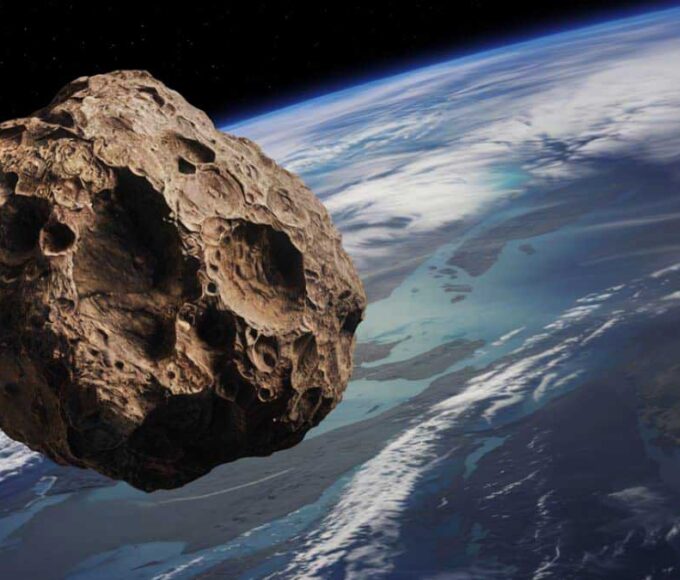
China is preparing to reach one of the most intriguing near-Earth objects ever explored as its Tianwen-2 spacecraft approaches the asteroid 469219 Kamoʻoalewa, also known as 2016 HO3, in early July. Often referred to as Earth’s “mini-moon” because of its unique orbital relationship with our planet, the asteroid is expected to become the target of China’s first asteroid sample-return mission. If the spacecraft successfully arrives, it will collect material from the asteroid and later return the samples to Earth inside a dedicated capsule.
Discovered in 2016, Kamoʻoalewa is one of only a small number of known quasi-satellites. Measuring between 40 and 100 meters (130 to 330 feet) across, it is roughly comparable in size to the Statue of Liberty and could become the smallest asteroid ever visited by a spacecraft. Its Hawaiian name means “an oscillating celestial object,” reflecting its unusual orbit around the Sun that remains synchronized with Earth, creating the appearance that it circles our planet over long periods.
Scientists are especially interested in Kamoʻoalewa because evidence suggests it may not be a typical asteroid. Studies examining the light reflected from its surface indicate similarities to lunar rocks collected during the Apollo missions. This has led researchers to propose that the object may be a fragment of the Moon that was blasted into space by a major impact millions of years ago, making the mission an opportunity to study what could be a long-lost piece of Earth’s natural satellite.
Launched on May 28, 2025, Tianwen-2 will spend several months surveying and mapping the asteroid after arrival while identifying suitable locations for sample collection. Mission planners intend to gather between 20 and 100 grams of material using both touch-and-go sampling techniques and an anchoring system equipped with drills.
According to the mission timeline, Tianwen-2 will depart Kamoʻoalewa in April 2027 before delivering its sample capsule back to Earth in November of the same year. After releasing the capsule, the spacecraft will continue its journey by using Earth’s gravity to redirect toward the main-belt comet 311P/PanSTARRS, also known as P/2013 P5 (PanSTARRS), which was famously imaged by NASA’s Hubble Space Telescope in 2013. The spacecraft is expected to reach the comet around 2035.
Because quasi-satellites remain relatively close to Earth for extended periods, they are considered attractive targets for future robotic exploration. Kamoʻoalewa follows the Sun in a 1:1 orbital resonance with Earth, completing one orbit for every orbit Earth makes. This accessibility has also fueled interest in the long-term potential of asteroid mining for resources such as water ice and platinum-group metals. Research published in 2025 by Spherical Insights & Consulting projects the global space and asteroid mining market could grow to $16 billion by 2035.





Related Articles
NASA Reveals Crater Left by SpaceX Falcon 9 on the Moon
NASA has released before-and-after images showing the impact site where an unmanned...
96% ‘Blood Moon’ Eclipse Will Light Up Skies on Aug. 27-28
Skywatchers have another major celestial event to look forward to later this...
July New Moon Begins Countdown to August 12 Total Solar Eclipse
The new moon arriving at 5:43 a.m. EDT on Tuesday, July 14,...

China’s Tianwen-2 Reaches Earth’s Rare Quasi-Moon Asteroid
China’s Tianwen-2 spacecraft has successfully arrived at 469219 Kamoʻoalewa, also known as...
Leave a comment