





96% ‘Blood Moon’ Eclipse Will Light Up Skies on Aug. 27-28
 193cc Agency CouncilAugust 13, 20262 Mins read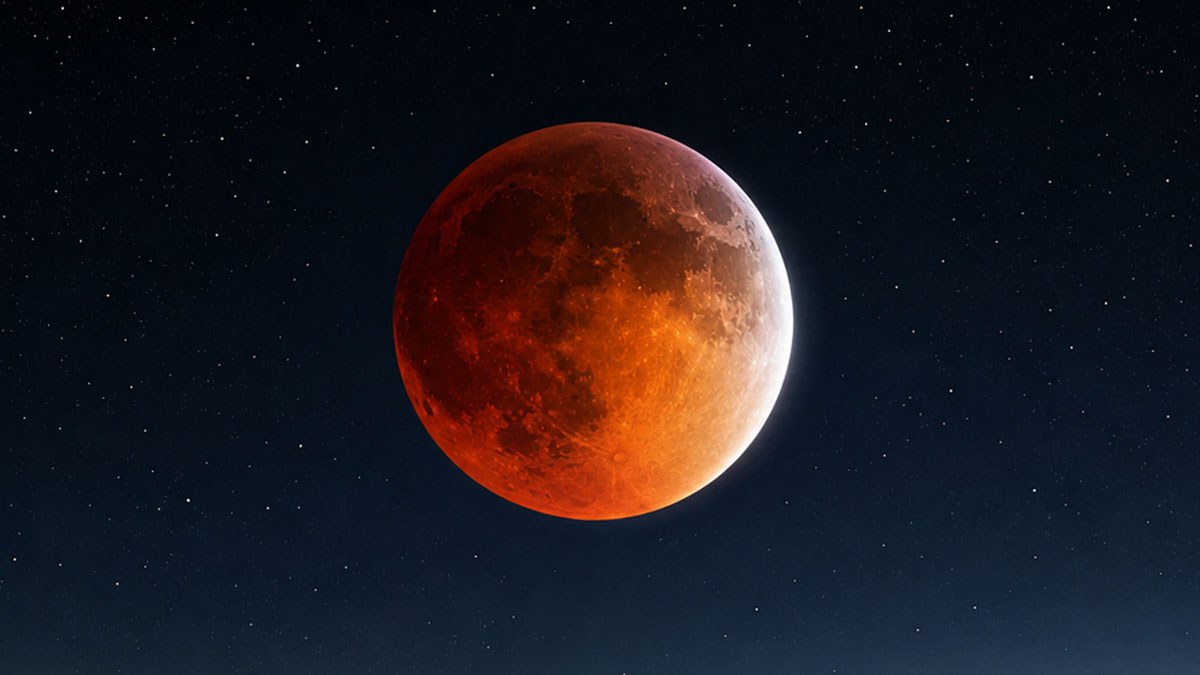
Skywatchers have another major celestial event to look forward to later this month as a deep partial lunar eclipse is set to unfold on Aug. 27-28. The eclipse will see 96.2% of the moon enter Earth’s darkest central shadow, creating a reddish-orange appearance that could make the event look remarkably similar to a total “blood moon.”
The partial lunar eclipse will be visible across Europe, Africa, North America and South America. Observers in North and South America will have the most favorable viewing opportunity, with the entire eclipse expected to be visible from beginning to end, weather permitting.
Unlike a solar eclipse, the lunar event does not require special eye protection. The moon can be viewed safely with the naked eye, binoculars or a telescope throughout the eclipse.
The event will last approximately 5 hours and 38 minutes as Earth’s shadow gradually crosses the moon. The most dramatic moment will arrive at maximum eclipse at 12:12 a.m. EDT on Aug. 28, when 96.2% of the lunar surface will be inside Earth’s umbra. For viewers on the U.S. West Coast, that corresponds to 9:12 p.m. PDT on Aug. 27.
A small portion of the moon will remain outside Earth’s darkest shadow and continue receiving direct sunlight. That prevents the event from being classified as a total lunar eclipse, but the relatively narrow illuminated section means the difference could be difficult to distinguish visually. Most of the moon will be darkened and may take on shades of red, copper and orange.
The unusual coloring occurs because lunar eclipses happen when Earth moves between the sun and the full moon. Sunlight passing through Earth’s atmosphere is filtered as it travels toward the lunar surface, with blue wavelengths scattered while red light continues through the atmosphere and reaches the moon.
The Aug. 27-28 event follows the total solar eclipse that occurred on Aug. 12, making it the closing act of an especially active eclipse season. North and South American observers will be able to watch the lunar eclipse throughout its progression if weather conditions cooperate.
For observers in Europe, the eclipse will take place with the moon positioned low in the western sky before sunrise. That timing could create opportunities to photograph the eclipsed moon alongside city skylines, coastlines and mountain landscapes as morning twilight develops.
The eclipse is expected to be particularly notable because a more impressive lunar eclipse will not occur until New Year’s Eve 2028, while the next comparable opportunity in North America will come on June 26, 2029.
The following eclipse season will arrive six months later. It will begin with an annular solar eclipse, commonly known as a “ring of fire,” on Feb. 6, followed by a penumbral lunar eclipse on Feb. 20-21.






Related Articles
NASA Reveals Crater Left by SpaceX Falcon 9 on the Moon
NASA has released before-and-after images showing the impact site where an unmanned...
July New Moon Begins Countdown to August 12 Total Solar Eclipse
The new moon arriving at 5:43 a.m. EDT on Tuesday, July 14,...

China’s Tianwen-2 Reaches Earth’s Rare Quasi-Moon Asteroid
China’s Tianwen-2 spacecraft has successfully arrived at 469219 Kamoʻoalewa, also known as...

Strawberry Moon Lights Up Skies With Lowest Full Moon of 2026
Skywatchers across North America will have the chance to witness June’s full...
Leave a comment