





Moonshot AI’s Kimi K3 Highlights Shift Toward Open-Weight AI
 193cc Agency CouncilJuly 28, 20262 Mins read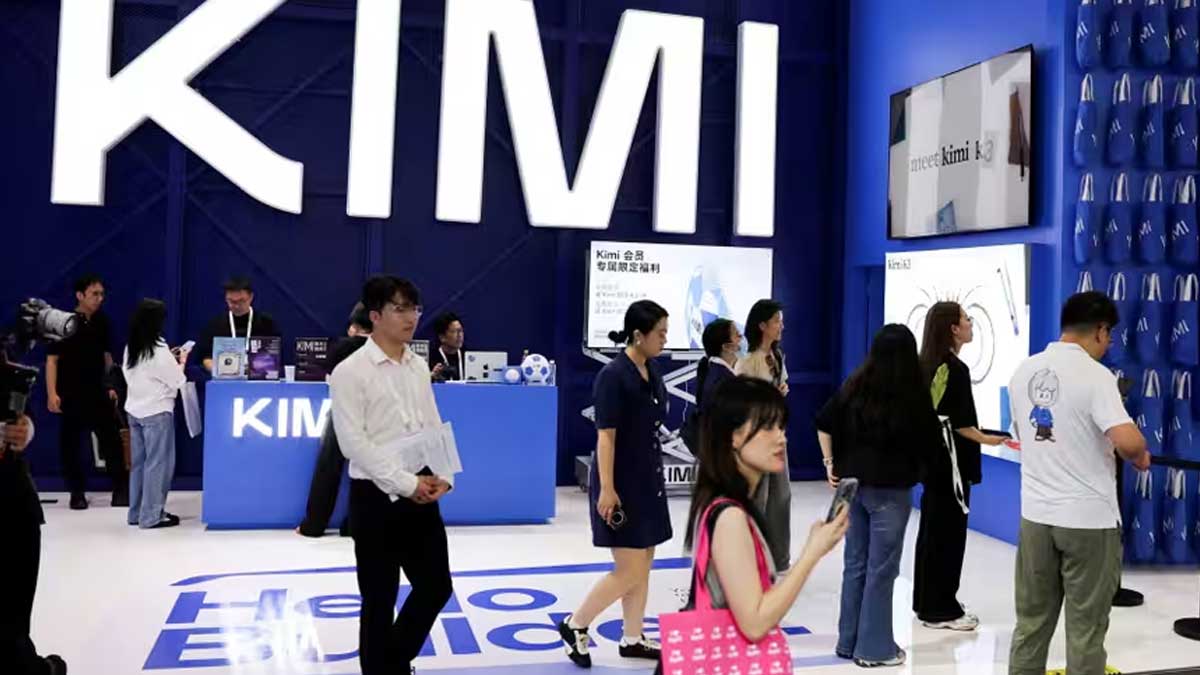
Moonshot AI has introduced Kimi K3, a 2.8 trillion-parameter open-weight artificial intelligence model that underscores the growing competition between open-weight and proprietary AI systems. The release highlights advances in architecture, enterprise adoption and operational efficiency, while adding momentum to the industry’s ongoing debate over whether open-weight models are better positioned for long-term growth.
Kimi K3 builds on the “Agent Swarm” framework first introduced with Kimi K2.5, replacing traditional sequential tool execution with a parallel processing approach. According to the Kimi K2.5 technical paper, sequential execution becomes increasingly inefficient as AI systems handle larger and more complex workloads. The new framework allows an orchestrator to create and coordinate multiple sub-agents, enabling Kimi K3 to run up to 300 sub-agents, manage more than 4,000 tool calls for a single task and reduce inference latency by as much as 4.5 times in broad search scenarios.
The model also expands multimodal capabilities by incorporating the vision architecture from Kimi K2.5 directly into pretraining rather than adding it later through an adapter. The system combines the MoonViT-3D native-resolution vision encoder, an MLP projector and the Kimi K2 Mixture-of-Experts language model. Unlike DeepSeek’s current open-source models, which remain primarily text-based, Kimi K3 supports visual-to-code generation and software engineering tasks that require understanding screenshots and interface layouts, reducing the need for separate vision models or closed multimodal APIs.
Enterprise adoption has also accelerated. DoorDash has integrated Kimi models for lower-level internal tasks while reserving Anthropic’s Fable for more advanced workloads. Coinbase has confirmed internal use of Kimi, and coding startup Cursor, which was acquired by SpaceX, built its product using a Kimi model as its foundation. Data from AI marketplace OpenRouter indicates Chinese AI models now account for roughly 60% of token usage among U.S. companies using the platform. Nvidia CEO Jensen Huang also said in an Axios interview that U.S. companies “absolutely should be allowed to use Chinese models,” reflecting Nvidia’s influence as a leading supplier of AI hardware.
Kimi K3 is the first open-weight model to reach 2.8 trillion parameters. It employs a Mixture-of-Experts architecture with 896 experts while activating only 16 during inference to improve efficiency. The model also introduces Kimi Delta Attention, a hybrid linear attention mechanism that delivers a 6.3-fold decoding speed improvement when processing million-token contexts.
Performance benchmarks show the model competing closely with leading proprietary systems. On the BrowseComp benchmark, which measures real-world research and browsing performance, Kimi K3 scored 91.2, compared with Claude Fable 5 at 88.0 and GPT-5.6 Sol at 90.4. In coding evaluations, Kimi K3 completed tasks at substantially lower cost, with rollout expenses of $4.65 versus $13.41 for Claude Fable 5, while a full 452-rollout benchmark cost $2,103 compared with $6,010. The model delivered approximately 2.8 times more solved tasks per dollar on the benchmark.
The release also reinforces the argument that widespread adoption of AI depends on open distribution. The article contends that AI, like previous infrastructure technologies including the steam engine, microprocessor and optical fiber, achieves its greatest economic impact when it can be broadly deployed, customized and integrated across industries. It argues that closed AI systems create barriers through per-inference pricing, limited customization and restrictions on deploying models with proprietary data, while open-weight models allow organizations to fine-tune, modify and run AI on local infrastructure without recurring usage costs. According to the article, these distribution advantages are likely to increase competitive pressure toward open-weight architectures as AI adoption expands globally.





Related Articles

Trump and Xi Offer Diverging Visions for the Future of AI
The United States and China are presenting sharply different approaches to the...

AI ‘Actor’ Tilly Norwood Switches to Cantonese During Interview
AI-generated “actor” Tilly Norwood appeared to unexpectedly switch languages during an interview...
OpenAI Reveals Six New AI Misalignment Incidents
OpenAI has disclosed six cases of unexpected or concerning model behavior observed...


Jensen Huang Says AI Cybersecurity Could Drive New Demand
Nvidia CEO Jensen Huang appeared to dismiss growing concerns about the risks...
Leave a comment