





SpaceX Surges Past Amazon as Musk’s Wealth Tops $1.4 Trillion
 193cc Agency CouncilJune 17, 20262 Mins read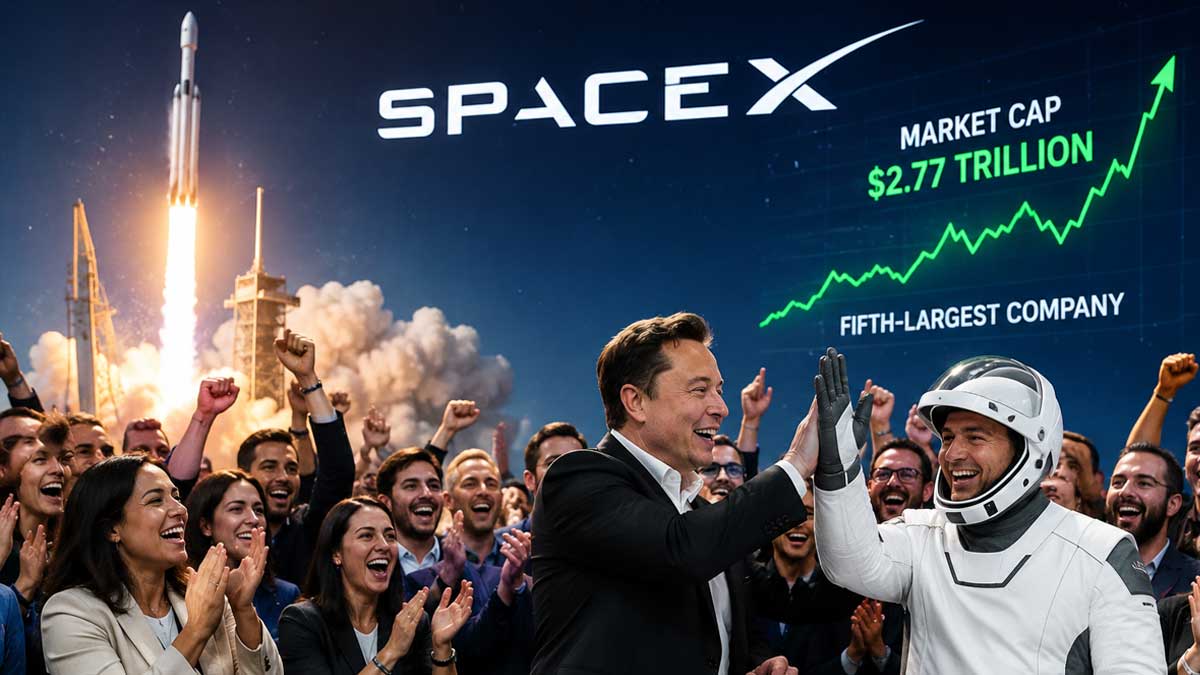
Elon Musk’s personal fortune climbed above $1.4 trillion on Tuesday after shares of SpaceX continued their powerful post-IPO rally, pushing the aerospace company ahead of Amazon in global market value rankings. The latest gains strengthened SpaceX’s position among the world’s most valuable companies and further expanded Musk’s lead as the richest person globally.
Shortly after markets opened on Tuesday, SpaceX stock rose more than 10%, lifting the company’s valuation to approximately $2.77 trillion. That increase moved the company ahead of Amazon, which was valued at roughly $2.6 trillion, making SpaceX the fifth-largest company in the world by market capitalization.
The rally adds to an impressive run since SpaceX’s public debut. Shares have advanced nearly 35% since Friday’s initial public offering, after rising 19% on their first trading day and gaining another 19.5% on Monday.
The surge in the company’s stock price increased Musk’s net worth by an estimated $119.1 billion in a single day, bringing his wealth to around $1.4 trillion. According to estimates, Musk now holds a lead of more than $1 trillion over Google co-founder Larry Page, whose fortune stands at approximately $300.7 billion.
Musk owns about 4.8 billion SpaceX shares, representing roughly 38% of the company. He also controls an additional 350 million stock options with an exercise price of $8.40 per share.
With its valuation continuing to rise, SpaceX is approaching Microsoft, currently valued at about $2.92 trillion, in the race for the fourth-largest company ranking. Above Microsoft sit Apple at approximately $4.3 trillion and Alphabet at around $4.4 trillion, while Nvidia remains the world’s most valuable company with a market capitalization of $5 trillion.
In a filing submitted to the Securities and Exchange Commission on Monday, SpaceX revealed plans to acquire Anysphere, the parent company of the AI coding platform Cursor, in a deal valued at $60 billion. The company expects the transaction to be completed by the third quarter of 2026. Cursor and SpaceX had previously announced a partnership in April focused on artificial intelligence for coding and knowledge-based work. At that time, SpaceX said it retained the option to either pay Cursor $10 billion or proceed with a full acquisition worth $60 billion.
The company’s rapid rise follows one of the most closely watched stock market debuts in recent years. Strong investor demand helped expand the IPO to $85 billion, fueling optimism around Musk’s long-term vision. Musk has projected that SpaceX could generate $1 trillion in annual revenue by 2030, a dramatic increase from the company’s reported $18.7 billion in revenue during 2025. Despite that growth outlook, SpaceX recorded a net loss of $4.9 billion for the year and a loss of $4.28 billion through its most recent quarter.
Not all investors are convinced by the company’s soaring valuation. Among the critics is investor Michael Burry, known for “The Big Short,” who has argued that SpaceX’s IPO filings did not contain evidence supporting a valuation of $1 trillion, let alone $2 trillion.






Related Articles
Musk’s Tesla Pay Deal Helps Drive CEO Compensation Higher
Chief executive compensation at S&P 500 companies reached a record level in...
Larry Ellison Surpasses Jensen Huang in Billionaire Rankings
Oracle co-founder Larry Ellison moved ahead of Nvidia CEO Jensen Huang on...
Bernard Arnault Joins X Amid LVMH Family Succession Scrutiny
LVMH chairman Bernard Arnault made his first-ever social media post on Monday,...

Elon Musk’s Net Worth Drops Below $700 Billion After SpaceX Slide
Elon Musk’s fortune has fallen below the $700 billion mark for the...
Leave a comment