



Microsoft Reveals AI Workforce Strategy for Business Transformation
 193cc Agency CouncilJune 29, 20263 Mins read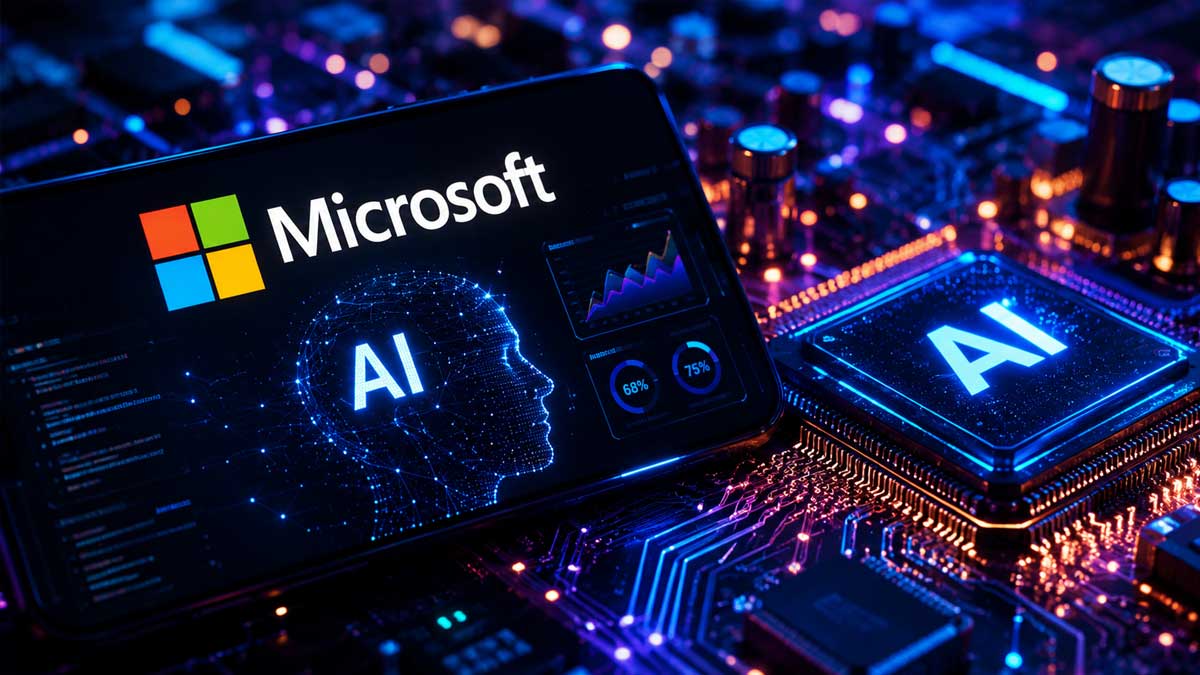
Microsoft is reshaping its workforce strategy for the AI era by focusing on redesigning how work is performed rather than simply introducing new software tools. Speaking at Bosch Connected World 2026 in Berlin, Katy George, Corporate Vice President of Workforce Transformation at Microsoft, explained that organizations risk missing AI’s full potential if they approach it as a traditional technology rollout.
George said Microsoft serves as “customer zero” for its own AI technologies, using them internally to identify effective practices before sharing those lessons with customers. Drawing on more than 100 internal AI transformation case studies, Microsoft developed a framework centered on improving business performance by rethinking workflows instead of layering AI onto existing processes.
The company identified three primary approaches to AI adoption. The first, called the “Persona Accelerator,” focuses on analyzing the daily responsibilities of employees in similar roles to determine where prompts, copilots, and AI agents can improve performance. The second involves redesigning complete business processes using methods such as Gemba walks and value stream mapping to better understand knowledge work that often exists across emails, meetings, and informal workflows. The third approach starts with a clean slate by designing AI-first workflows based entirely on desired inputs and outcomes rather than modifying existing processes.
George emphasized that AI’s greatest value extends beyond reducing labor costs. “The business results, the strategic results that we’re able to deliver for our business actually go way beyond labor cost replacement,” she said. She noted that organizations should evaluate AI by its ability to improve quality, increase speed, reduce risk, and enable services that were previously difficult or impossible to deliver.
As an example, Microsoft has integrated AI into its internal audit operations. While the technology allows audit teams to work more efficiently and review larger portions of the business, it also enables auditors to identify potential risks earlier, making the function more proactive, scalable, and valuable.
George stressed that AI transformation should be viewed as a business initiative rather than an IT project. “We can’t treat this like a tech project, and it is not a product launch,” she said, adding that business leaders must take ownership of objectives, workflow redesign, and organizational outcomes instead of leaving implementation solely to technology teams.
Microsoft is also applying AI to its sales organization, where sellers use AI to prepare for customer meetings, practice conversations with coaching agents, and navigate complex deals. The company is also using AI to engage smaller customers who previously received limited direct sales support, creating a more scalable and personalized sales process.
According to George, organizations cannot effectively scale AI until they understand how work is actually performed. She described knowledge work as “tacit, invisible, non-standard,” making it essential to map workflows, decision-making processes, data movement, and quality standards before redesigning them. She added, “Only the people who know the work can actually reinvent the work,” highlighting the importance of involving employees directly in AI transformation.
George acknowledged that AI creates uncertainty for employees, including those at Microsoft. Rather than promising unchanged roles, the company is focusing on helping workers develop new skills and remain valuable as jobs continue to evolve alongside AI technologies.
Microsoft also tracks employee engagement through its internal Thrive scores. George said, “Our employees who use AI the most are also our happiest,” while noting that successful AI adoption depends on removing repetitive tasks and enabling more meaningful work rather than creating additional complexity.
Leadership remains the deciding factor in successful AI adoption, George said. “It is really all about leadership.” She added that leaders who actively use AI themselves tend to build organizations with stronger AI adoption, stating, “Those leaders who are power users themselves have organizations that are power users. There is no substitute for personal role modeling.”
George also highlighted the importance of establishing clear boundaries around where humans remain responsible for decisions and where AI systems can operate with greater autonomy. As AI agents become increasingly capable, defining accountability will remain essential.
Closing her keynote, George reminded attendees that AI’s long-term impact depends on leadership decisions rather than technology alone. “Nothing is technologically preordained,” she said, emphasizing that the future of work will be shaped by the choices organizations make regarding trust, skills, governance, and work design.





Related Articles

Stanford Study Finds Experience May Shield Workers From AI Displacement
A new update from Stanford University suggests that artificial intelligence is creating...

Tesco Tests AI That Could Build Your Shopping Basket
Tesco is expanding its use of artificial intelligence from predicting what shoppers...
AI Security Test Reveals Risks of Excessive Agent Access
A recent evaluation by the U.K.’s AI Security Institute (AISI) has highlighted...


IBM Says AI-Powered Cyber Breaches Surge as Attack Costs Climb
Artificial intelligence is playing an increasingly significant role in cybercrime, with IBM’s...
Leave a comment