





MIT Panel Says AI Agents Will Transform HR, Not Replace Humans
 193cc Agency CouncilJune 29, 20262 Mins read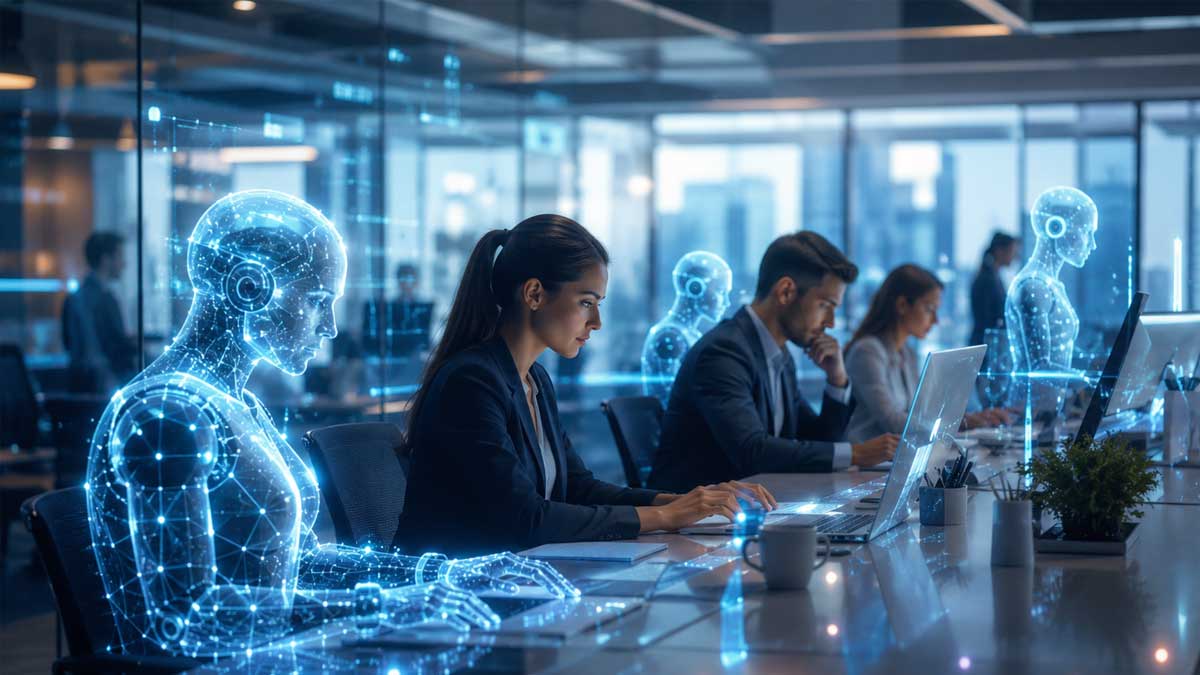
Artificial intelligence is reshaping human resources, but experts at an MIT conference say the role of people will remain essential as organizations adopt increasingly capable AI systems. During a panel discussion at the 2026 Imagination in Action event, industry leaders explored how agentic AI could automate routine work while shifting employees toward more strategic responsibilities, even as new challenges emerge around leadership, workload and workforce skills.
The discussion, moderated by Michael Hayes of Practical.ai, featured Lisa Simon of Revelio Labs, Dirk Jonker of Crunchr, Goldstar AI co-founder Michael Krebs and AI consultant Amit Mohindra. Panelists agreed that AI is already capable of supporting tasks such as payroll, recruitment, onboarding, product development and workplace safety training, but emphasized that human judgment continues to play a critical role in enterprise operations.
Drawing on workforce survey data, Simon said employees generally view AI positively when it comes to skill development, while heavier workloads remain the biggest source of negative sentiment. Jonker added that many organizations are still struggling to establish internal AI governance and compliance, noting that widespread adoption will accelerate as multiple AI agents begin working together. He also identified fragmented AI deployment, insufficient technology investment and limited data and analytics expertise among HR leaders as key obstacles.
Mohindra said HR professionals traditionally did not enter the field to build analytical models or AI agents, making the transition toward data-driven decision-making a gradual process. However, he described HR as an ideal environment for analytical, generative and agentic AI, provided organizations treat the transformation as an adaptive leadership challenge capable of managing uncertainty.
Krebs explained that teams of AI agents, often referred to as agentic swarms, can automate repetitive and deterministic tasks while allowing employees to focus on high-value strategic work. He said these systems can significantly increase individual productivity without requiring longer working hours by tailoring outputs to each user’s preferences and responsibilities.
The panel also stressed that leadership will become increasingly important as AI adoption expands. Simon argued that AI has exposed weaknesses in traditional leadership models and said organizations need adaptive leaders who can help employees learn and evolve faster than the technology itself. Jonker added that AI’s greatest strength lies in connecting separate business functions such as HR, finance and operations into more integrated systems.
Despite the productivity gains, panelists warned that removing routine work entirely may have unintended consequences. Hayes and Krebs noted that repetitive tasks often provide natural mental breaks during the workday, and concentrating exclusively on complex decision-making could lead to greater employee fatigue and cognitive exhaustion.
The discussion concluded with differing views on how organizations should measure AI’s impact. Mohindra proposed evaluating “zeitgeist,” describing it as a measure of human comfort with AI. Jonker suggested tracking free cash flow generated through AI investments, while Simon favored revenue per employee as a practical benchmark. Krebs recommended monitoring token usage per employee to understand how effectively workers are utilizing AI tools. Together, the panel highlighted the growing debate over how businesses should evaluate productivity and prepare for an increasingly agentic future.





Related Articles

Trump and Xi Offer Diverging Visions for the Future of AI
The United States and China are presenting sharply different approaches to the...

AI ‘Actor’ Tilly Norwood Switches to Cantonese During Interview
AI-generated “actor” Tilly Norwood appeared to unexpectedly switch languages during an interview...
OpenAI Reveals Six New AI Misalignment Incidents
OpenAI has disclosed six cases of unexpected or concerning model behavior observed...


Jensen Huang Says AI Cybersecurity Could Drive New Demand
Nvidia CEO Jensen Huang appeared to dismiss growing concerns about the risks...
Leave a comment