





BMW’s New iX3 Aims to Strengthen Europe’s EV Challenge
 193cc Agency CouncilJune 29, 20263 Mins read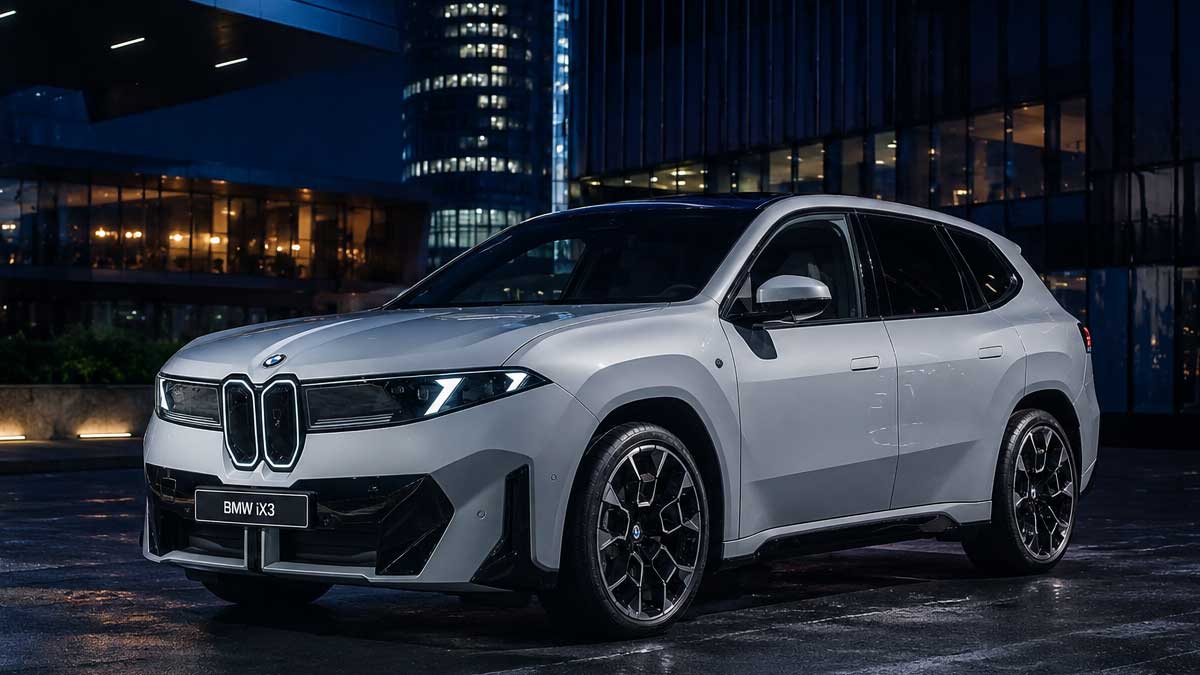
BMW is preparing to launch its new iX3 “Neue Klasse” electric SUV, a model viewed as a pivotal step for both the German automaker and Europe’s premium automotive industry as competition from Chinese manufacturers continues to intensify. Early impressions of the vehicle have been positive, while industry analysts see the model as central to BMW’s long-term electrification strategy.
The competitive pressure was highlighted by global consultancy AlixPartners, which forecasts Chinese automakers will increase their share of the European vehicle market from roughly 10% today to 16% by 2030. With Europe’s annual auto market expected to remain around 12 million vehicles—well below pre-pandemic levels—the projected growth of Chinese brands is expected to come largely at the expense of established European, Japanese and Korean manufacturers. The challenging outlook has already contributed to falling share prices and restructuring efforts across the industry, including Reuters’ report that Volkswagen plans to eliminate up to 100,000 jobs worldwide and may close four factories in Germany.
BMW considers the Neue Klasse program its most significant technological investment to date. The multi-billion-euro initiative will support more than 40 future models, beginning with the all-electric iX3 SUV and the upcoming i3 sedan. Former BMW CEO Oliver Zipse previously described the project as “our biggest future-focused project,” adding that it represents a major advance in technology, design and driving experience. Zipse, who was succeeded by Milan Nedeljković in May, also said the innovations developed through Neue Klasse would benefit BMW’s entire product lineup regardless of powertrain.
Investment research firm Bernstein also praised the initiative, describing Neue Klasse as BMW’s largest leap in technology and investment and predicting it could strengthen the company’s competitive position in the global automotive market.
Initial driving impressions suggest the iX3 may not fully achieve its claimed 500-mile driving range under real-world conditions. However, reviewers noted that its high-speed efficiency is comparable to other European electric vehicles, with approximately one-third of range lost during sustained motorway driving. Chinese competitors typically experience greater range reductions at high speeds, with losses often reported between 50% and 60%.
The competitive landscape is becoming increasingly crowded. Alongside established rivals such as the Audi A6 e-tron quattro, Mercedes GLC, Polestar 3, Porsche Macan, Tesla Model Y, Genesis GV60, Volvo EX60 and Lexus models, Chinese manufacturers including XPeng, Zeekr, NIO and BYD are rapidly expanding their presence in Europe’s premium electric vehicle segment.
Peter Richardson, Research Director at Counterpoint Technology, said BMW remains one of Europe’s strongest legacy electric vehicle manufacturers, with electrified models now accounting for approximately 40% of its regional sales. He highlighted the Neue Klasse platform’s sixth-generation eDrive system, 800-volt electrical architecture for faster charging, cylindrical battery cells and the new “Heart of Joy” control unit developed with Qualcomm. The integrated system combines drivetrain, braking, energy recuperation and stability functions to improve handling while supporting Level 2+ semi-autonomous driving capabilities.
Richardson said BMW continues to benefit from strong brand recognition in Europe, although it has lost market share in China as domestic manufacturers introduce new models more quickly and at lower prices. He added that BMW’s reputation for cabin quality, driving dynamics and brand value continues to provide an advantage, but warned that Chinese automakers are rapidly improving their products and narrowing the gap.
Felipe Munoz, founder of Car Industry Analysis, believes BMW is among the best-positioned non-Chinese manufacturers in the electric vehicle market. He noted that while Chinese companies retain an advantage in speed to market, European brands remain highly competitive. Benjamin Kibies, Senior Automotive Analyst at Dataforce, added that Chinese manufacturers currently lead in battery technology and software, while European brands continue to excel in driving dynamics, usability and customer preferences, including the retention of physical controls.
Richardson also warned that European manufacturers face a decade of major transformation as electrification, software and autonomous technologies reshape the industry. He said cooperation between European and Chinese companies is likely to increase alongside competition and noted that future European Union policies could either strengthen or weaken the region’s established automakers. Although European brands continue to benefit from strong customer loyalty and extensive dealer networks, he described those competitive advantages as increasingly vulnerable to emerging rivals.




Related Articles
Kia EV2 Review: Affordable Electric SUV Targets 275-Mile Range
Kia is targeting the growing affordable electric SUV market with the new...
Aventon Current eMTB Brings 750W Power and Full Suspension
Aventon has expanded its electric mountain bike lineup with the new Current,...
2027 Kia Telluride Turbo Hybrid Brings Power and Luxury Value
The 2027 Kia Telluride Turbo Hybrid marks a major step forward for...

Ducati Streetfighter V2 Delivers 120 HP in a Lighter Package
The 2025 Ducati Streetfighter V2 combines the performance-focused hardware of Ducati’s Panigale...
Leave a comment